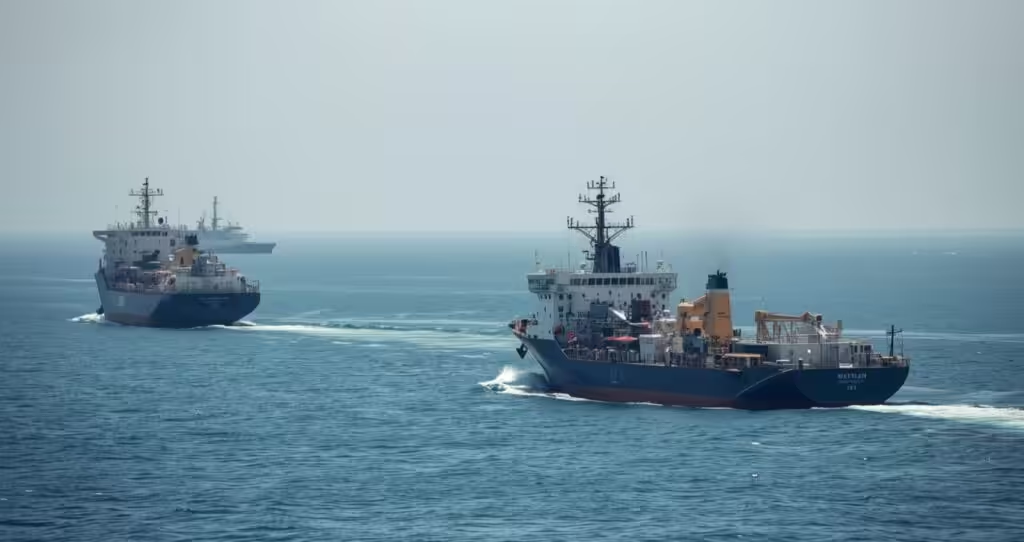

The Strait of Hormuz saw itself back in crisis on Saturday after Iran rescinded their temporary opening of the strategic channel, targeting commercial ships in their warning that all ships will be shot at until America stops the naval blockade around their port.
This new development comes almost less than 24 hours after Iran’s Foreign Minister proclaimed the strait “totally open” for all commercial vessels, which has raised hopes of a new turn of events in the now 7 weeks long war between the US, Israel and Iran.
According to the Revolutionary Guards Navy, the strait will remain closed until America removes its naval blockade, which is considered a violation of the terms of the ceasefire.
In this case, the Revolutionary Guard’s gunboats fired on a tanker, and a mysterious explosion hit a ship, causing damage to the cargo aboard, as per UK Maritime Trade Operations center.
The Indian government called in the Iranian ambassador due to the shooting of the Iranian guns on two Indian commercial ships, especially since Iran had previously granted clearance to several ships from India.
As per tracking data, two of the ships were Indian ships, carrying about two million barrels of Iraqi oil.
US President Donald Trump said from the Oval Office that Iran was “getting a little cute” and that the country could not “blackmail” the US by closing the waterway.
Trump said that Washington and Tehran were having “very good conversations,” but he also said that fighting could start up again if a peace deal wasn’t reached before the ceasefire ends on Wednesday.
The ongoing confrontation has added further pressure to Australia.
Albanese informed the forum that Australia and its Indo Pacific partners are facing the disruption to their energy chain directly and requested that the strait be opened for all nations.
On the other hand, the stance taken by the government is being heavily criticized by Washington.
Trump stated that he is “not happy with Australia” because it did not help open the strait despite the fact that Canberra has maintained that it has not been officially asked.
More War News: US Navy blockade of Iranian ports holds firm, Pentagon says
Australia is very vulnerable to the crisis. The country depends on a lot of refined fuel that it buys from other countries.
Most of this fuel comes from South-East Asian refineries that get crude oil shipped through the strait.
This week, a fire at the Viva Energy refinery in Geelong, which makes about 10% of Australia’s fuel, made supply worries worse at a time when the country can least afford more problems.
Speaking to Al Jazeera, Chief of Navy Mark Hammond stated on 13 April that the Australian navy was prepared to assist in opening the strait, pending a decision by the government to do so.
According to a senior US official, the absence of any resolution to the dispute within a few days could lead to the resumption of hostilities.
As the ceasefire deadline looms large and the oil markets remain uncertain, it appears Australia will continue to face the dilemma of having its fuel security dependent on what transpires in a body of water located hundreds of kilometres away from it.