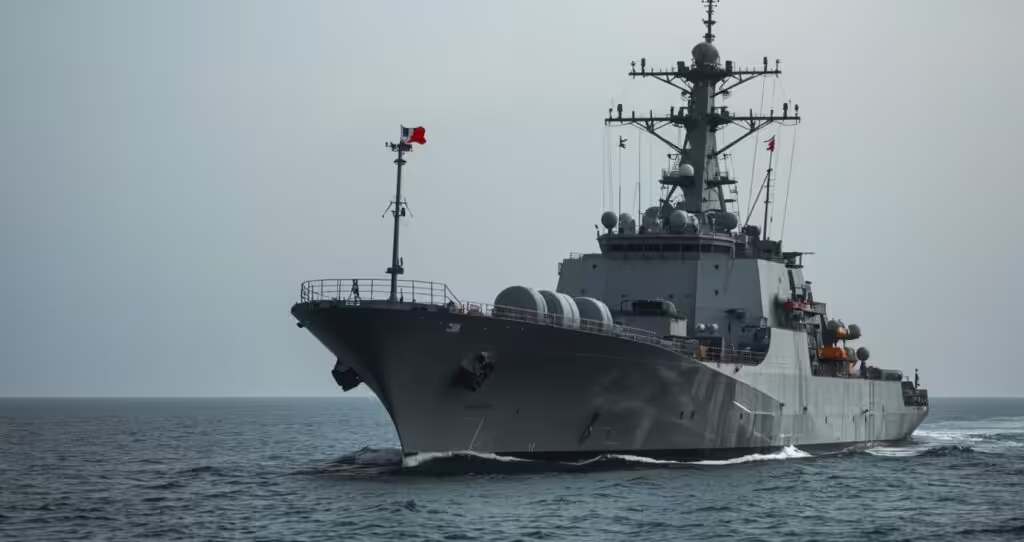

According to US Central Command, in excess of 10,000 sailors, Marine, and airmen, in addition to more than a dozen ships and aircraft, are implementing the naval blockade of Iran.
These include the aircraft carrier USS Abraham Lincoln, the USS Tripoli amphibious warship and numerous guided missile destroyers.
The blockade is reported to have been implemented “impartially against vessels of all nations entering or departing Iranian ports and coastal areas” in both the Arabian Gulf and the Gulf of Oman.
Importantly, it was stressed that ships sailing through the Strait of Hormuz from other destinations do not need clearance.
As part of the efforts at de escalating tensions with Iran, US President Donald Trump ordered a blockade of Iran on Monday when peace negotiations failed following the weekend delegation of the two sides held in Islamabad.
US delegation head and Vice President JD Vance claimed that Iran demonstrated some willingness but refused to give its positive assurance regarding abandoning its nuclear arsenal.
Instead of putting warships in the mined Strait of Hormuz, US forces are stopping ships further east in the Gulf of Oman after they have cleared the strait.
According to reports, not one ship attempted to violate the US naval blockade on Iran’s harbors during the first day of the blockade.
Iran has called the blockade “piracy” and the Islamic Revolutionary Guard Corps has said that any military ship that comes too close to the strait will be seen as breaking the ceasefire and will get a “severe response.”
A ceasefire that was agreed upon on April 8 and is supposed to last until April 21 is still in effect, but it is unclear how long the fragile truce will last.
Oil markets rattled
However, global energy markets have seen a significant shift. As of Monday, Brent rose by 7% to reach $US102 per barrel, which represents growth by about 40% since the start of the war.
Meanwhile, WTI increased by almost 8% to reach $US104 per barrel. However, oil prices dropped significantly on Tuesday after White House officials hinted at a second round of negotiations.
More War News: The shadow of global war: why experts say the risk is real but not inevitable
The analysts suggest that the operation involves high geopolitical risk factors.
According to Windward, there are about 157.7 million barrels of Iranian oil in the waters, with almost all of the shipments directed to China.
Thus, an attempt to disrupt the shipping of oil to China may start yet another front in the confrontation between the U.S. and China, only weeks before President Trump plans to visit the country.
Saudi Arabia has privately told the US to lift the blockade, warning that Tehran could respond by encouraging attacks on the Bab al-Mandeb, a Red Sea chokepoint that is very important for the kingdom’s own oil exports.
Even though the diplomatic situation is tense, it looks like both sides are still willing to talk.
Iran’s mine filled grip on the strait and America’s warships waiting on the other side are both blocking the world’s most important energy corridor for now.