

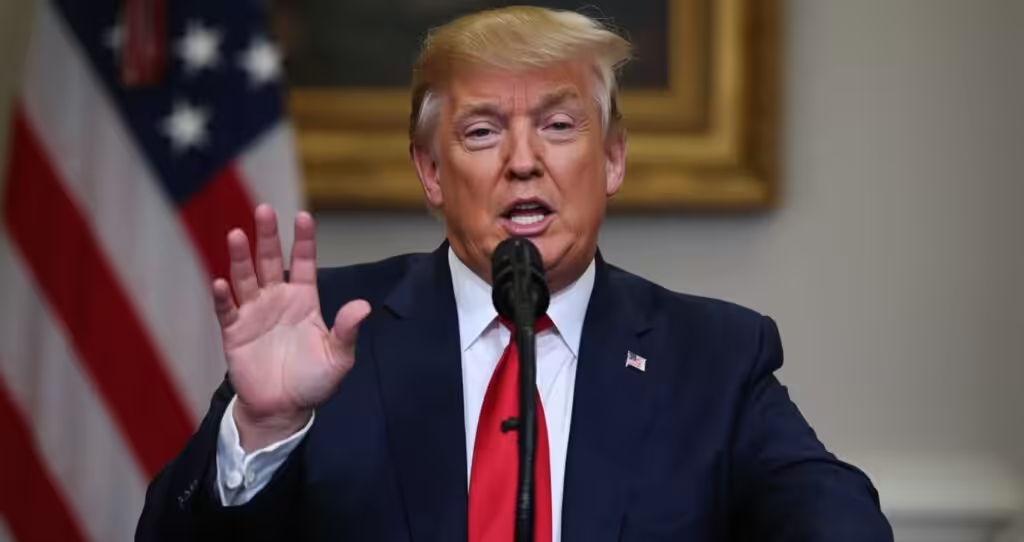

According to President Donald Trump, the American president’s military attack on Iran hasn’t ended yet since, as per his social media post made on Truth Social, it is “to be continued.”
The comment comes amid President Trump’s displeasure towards President Xi’s underestimation of where America is headed.
According to the president, during his visit to China, the list of achievements during his second term included record high share market prices, improved retirement savings accounts, success in military operations in Venezuela, and “the military decimation of Iran.”
It was also stated that all these achievements will “to be continued.”
The comment is making investors nervous since, following months of chaos in the Persian Gulf, global stock markets were already unstable.
At this point in time, there is a ceasefire agreement between the countries; however, it is barely holding.
Before heading to Beijing, President Donald Trump said that the truce agreement was on “massive life support.”
As for Vice President JD Vance, he stated in his comments to reporters this week that progress has been made towards the agreement, but nothing has been signed yet.
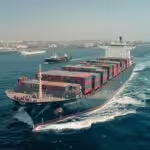
Chinese ships begin transiting strait
Iran has effectively shut the Strait of Hormuz since early March after American and Israeli airstrikes killed senior figures in Tehran including supreme leader Ayatollah Ali Khamenei.
World News: Trump meets Xi in Beijing as US warns Iran ‘frighteningly close’ to a nuclear weapon
The shutdown has choked off about a fifth of the world’s seaborne crude oil trade, driving up fuel prices and disrupting global supply chains.
Tehran has begun to allow some Chinese ships to pass after talks between Iranian officials and China’s foreign minister and ambassador, the semi official Fars news agency reported.
This week news followed the crude tanker Yuan Hua Hu loaded with Iraqi oil through the strait.
No information is available on whether Beijing paid the levy Iran tried to impose on shipping.
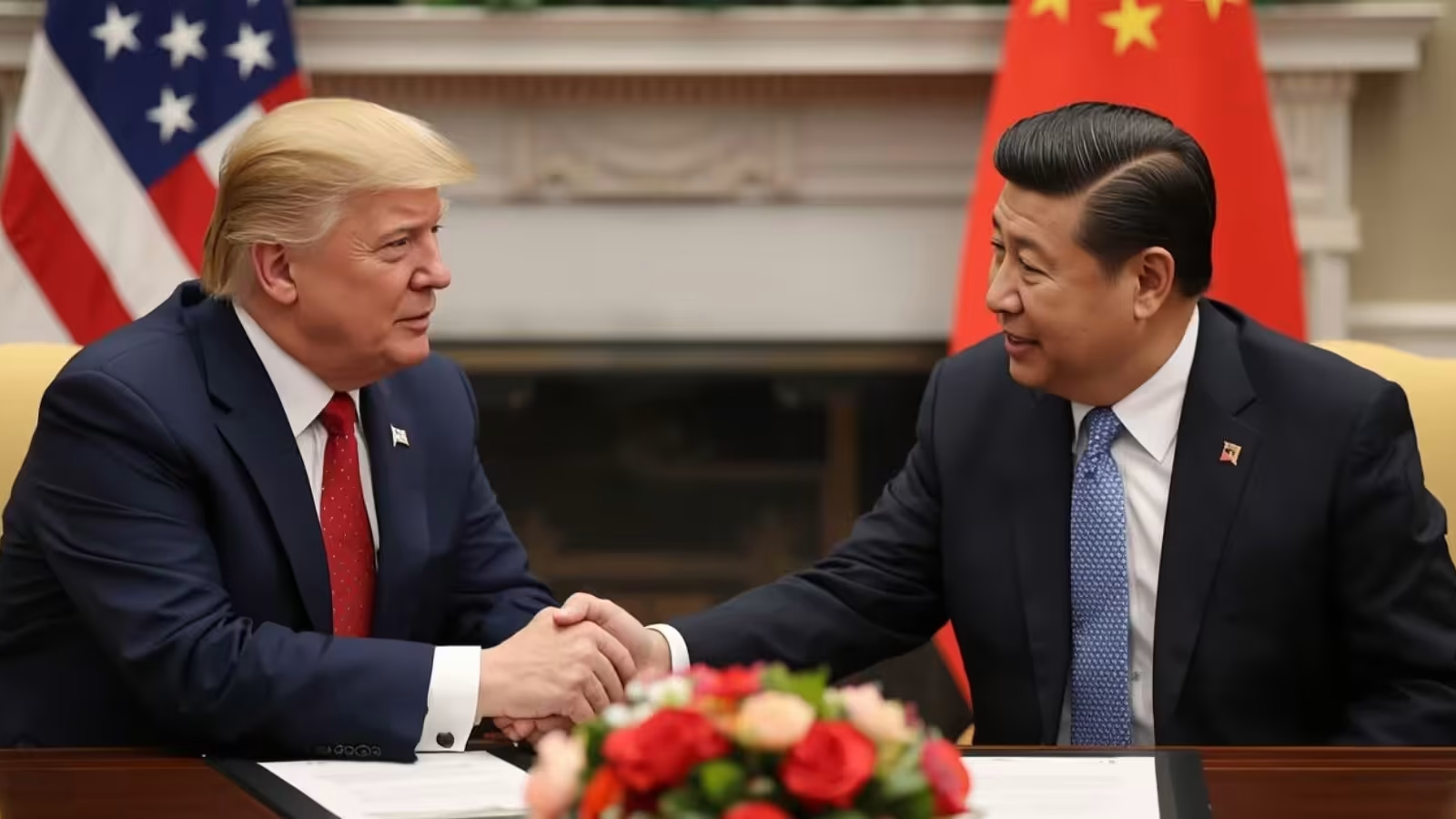
The White House announced that both Trump and Xi reached an understanding that the strait “should remain open in order to allow the transit of energy”.
Trump stated ‘ “Hannity” program that Xi had promised to him personally that he would not supply military hardware to Iran, and called it “a very big statement”, as well as that China was willing to mediate talks with Tehran.
US Treasury secretary Scott Bessent claimed that China has a much greater interest than the US does in the reopening of Hormuz strait.
He stated in his interview that Beijing would “do its best behind closed doors to convince the Iranian leadership”.
China is the world’s biggest importer of crude oil, as well as the top consumer of Iranian oil.
According to US Central Command, 70 commercial vessels had already been redirected by US forces to implement Trump’s closure of Iranian ports.
There are still high tensions in the area, with the reported sinking of the Indian cargo ship in the Omani territorial waters following a suspected attack by a drone or missile and capture of yet another vessel by the Iranians.