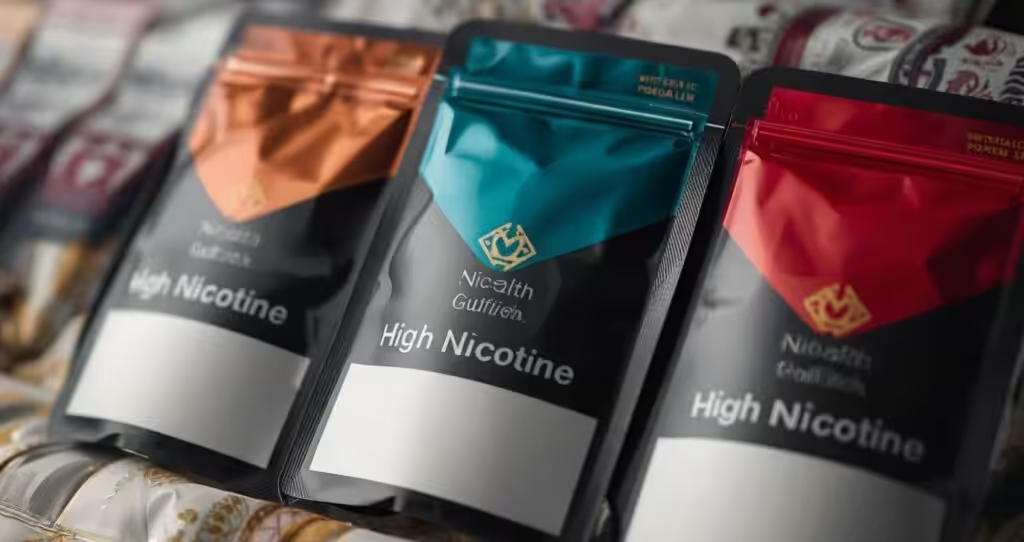

Health experts and proponents of tobacco control have been calling for stricter measures to be imposed on the sale of nicotine pouches in Australia.
That despite the fact that these little nicotine containing products are currently banned in the country, they are gaining tremendous popularity, especially among teenagers and young adults.
The reasons for this alarming situation become clear when one reviews the seizure figures of the past months.
These nicotine pouches, produced in large numbers by well known tobacco companies, such as Philip Morris International and British American Tobacco, are flavored oral pouches that deliver nicotine orally, but without smoke, vapor or tobacco leaf.
They come in many sweet and fruity flavors and are referred to as “tobacco free” on the labels.
Under Australia’s Poisons Standard, nicotine is a prescription only medicine, except for tobacco prepared for smoking or products approved for smoking cessation.
The Therapeutic Goods Administration has not approved nicotine pouches as a therapeutic aid, meaning they cannot be legally sold by retailers.
They may only be brought in for personal use with a valid prescription from a doctor.
However, the regulatory measures have failed to prevent the entry of the products into the market.
According to research, an ongoing national study conducted by researchers at the University of Sydney and the Cancer Council NSW, nicotine pouch usage was growing among people aged 14 to 24 years old.
Dr. Becky Freeman, the University of Sydney researcher leading the Generation Vape project, has noted the long standing practice of tobacco companies in changing their products to circumvent regulatory frameworks.
Also Read: Australia’s record Meth consumption cements nation among World’s heaviest users
Almost one out of five individuals within this age group admitted using a pouch within the last 30 days.
Health risks and the youth concern
Nicotine pouches can contain dangerously high amounts of nicotine, and unregulated products may contain unknown or harmful ingredients not listed on packaging.
The regulator pointed out there is no strong evidence they are effective in smoking or vaping cessation and that nicotine can have detrimental effects on adolescent brain development.
Monthly use of nicotine increases the risk of dependence ten times in adolescents compared with adults, the Alcohol and Drug Foundation says.
Pouches are particularly difficult for parents and teachers to identify as they are discreet, producing no smell or visible vapour.
SA was the first jurisdiction to implement a blanket ban on nicotine pouches as of January 2025, putting it in the same league as illicit cigarettes and e cigarettes in terms of regulation.
Nationally, TGA, in January 2026, went ahead with the proposal to classify nicotine pouches into Schedule 4 of the Poisons Standard.
Any unauthorised supply of nicotine pouches would subject a business to a fine of $50,000 and an individual to $10,000 in fines.
Welcome as these measures are, they may not go far enough, say health advocates. The global trend is definitely towards tighter controls.
France has banned nicotine pouches altogether, several other European countries have done so, and international research published in BMJ Public.
Without tighter border controls, more investment in education and continued tracking of youths’ behaviour, nicotine pouches could soon become the next front in the nation’s war against nicotine addiction.