American military sources have revealed that US warships had a confrontation with Iranian troops after being shot upon in the Strait of Hormuz despite Tehran implementing a new permit system whereby each vessel had to get prior permission to pass through one of the busiest sea corridors in the world.
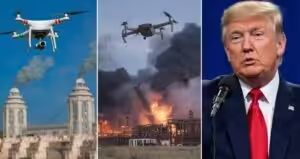
According to US Central Command, three US destroyers were targeted using missiles, unmanned aircrafts and small boats while moving and in retaliation, US forces made preemptive strikes on Iranian missile bases.
Command centers and surveillance units involved in attacking American warships.
No US ship was damaged in the operation, according to US officials. Iranian media agencies reported explosions near the Bahman pier on Qeshm Island amid the skirmish.
In his tweets, US President Donald Trump declared that Iranian militants had been “totally destroyed,” threatening further actions if Iran failed to reach a comprehensive agreement in the future.
War News: Trump warns Iran ‘you’ll find out’ as Gulf tensions push ceasefire to the brink
A press release by CENTCOM said that “the command is not seeking escalation but is postured and ready to protect American forces.”
New permit system for shippers
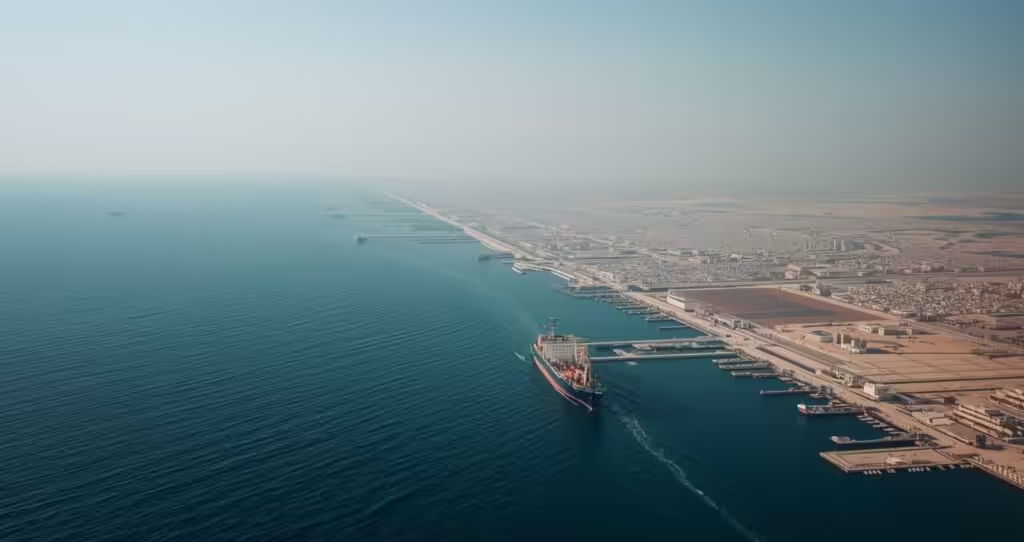
The collision comes as Iran’s newly created Persian Gulf Strait Authority began enforcing regulations in the waterway.
The system requires vessels to email a Vessel Information Declaration before transit, outlining ownership, crew nationalities, cargo and voyage plans.
The authority also is collecting tolls in exchange for safe passage, a practice that industry groups say violates international maritime law, according to Lloyd’s List Intelligence, a shipping data firm.
About a fifth of seaborne oil and liquefied natural gas normally passes through the strait and the disruption is being felt in world energy markets.
US petrol prices hit $4.50 a gallon for the first time in four years.
According to the UN International Maritime Organization, an estimated 1,500 ships and 20,000 crew members still remain trapped in the Persian Gulf.
“Seafarers are simply people who find themselves in geopolitical situations beyond their control,” Secretary General Arsenio Dominguez told an international gathering on maritime affairs in Panama.
While Washington refused to accept long term control of Iran over the strait, its plan dubbed Project Freedom was suspended after rescuing two US flagged vessels from the Persian Gulf.