The US and Iran are tantalizingly close to reaching a memorandum of understanding that will extend the fragile ceasefire between them and reopen the Strait of Hormuz.
JD Vance, US vice president, informed reporters on Thursday that the representatives of the two countries have come a long way towards signing a ceasefire MOU that would put the ceasefire in place, open up the strait to uninterrupted movement of ships, and initiate talks about Tehran’s nuclear program.
According to Vice President Vance, there are a number of unresolved issues, including Iran’s stockpile of enriched uranium and enrichment more broadly.
Vance said Iran has been negotiating in good faith but cannot promise success yet.
War News: Iran claims draft deal could reopen Strait of Hormuz, but White House calls it a fabrication
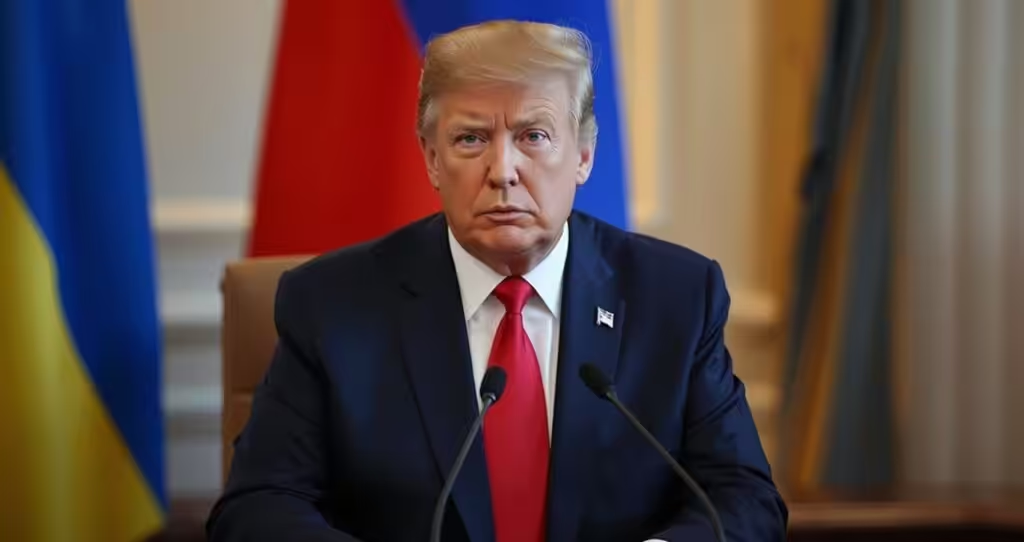
It was also noted that Vance could not say for sure whether Trump will approve the MOU, as it is “still TBD.”
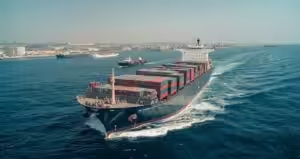
The deal, first reported by Axios, would allow commercial traffic through the Strait of Hormuz without tolls, and Iran would be required to clear the mines it has planted in the waterway to allow ships to pass freely.
In return, the US would lift its blockade on Iranian ports and grant some sanctions waivers so Iran could sell oil.
The MOU would also include a commitment from Iran not to pursue nuclear weapons, though the details of limits on enrichment are still under negotiation.
The first thing on the agenda in the 60 day window would be to address Iran’s stockpile of enriched uranium.
Tehran has denied this, with a senior Iranian source telling Reuters the nuclear issue was not part of the preliminary agreement.
Tensions persist on the water
As diplomats moved forward to seal the deal, developments in the Strait of Hormuz highlighted just how volatile things can get.
State TV station IRIB reported that Iranian forces shot at four ships that tried to sail through the waterway, warning shots fired because of the ship’s failure to coordinate passage through the Persian Gulf with relevant security agencies.
The broadcaster reported that the ships were initially warned about their actions but were forced to return after ignoring the warnings.
This happened less than six hours after the US launched new strikes against Iran, continuing what had been a series of strikes even while there is supposed to be a ceasefire since early April.
A big problem for Iran is who can actually close a deal.
Also Read: US strikes Iran, Trump pushes Abraham Accords expansion as Netanyahu escalates Lebanon offensive
Mojtaba Khamenei has been in hiding since a strike on February 28 killed his father, the former supreme leader Ali Khamenei, and left Mojtaba injured, according to reports.
Israeli sources told Channel 12 that while there may be understandings between Iran’s foreign minister and parliament speaker and the US negotiating team, there are no clear indications that Khamenei himself has signed off on the terms.
The three month battle, in which thousands have been killed, has thrown oil prices and international shipping routes into chaos.
Only time will tell whether the latest developments lead to a successful settlement or just another failed attempt.