It seems that peace negotiations between the U.S. and Iran will be held for the second time in Islamabad, despite President Trump’s declaration that if the temporary truce expired, “lots of bombs will start going off.”
According to reports on Tuesday, two regional officials stated that Pakistan appointed mediators have been informed that Vice President JD Vance and Iranian Parliament Speaker Mohammad Bagher Ghalibaf will arrive in Islamabad early Wednesday morning to lead their own negotiating teams.
This comes despite conflicting information from Tehran, where Iranian state television reported on Tuesday that no Iranian delegation has visited Islamabad since the truce began two weeks ago.
The diplomacy surrounding the negotiations has been marred by threats made by Trump himself.
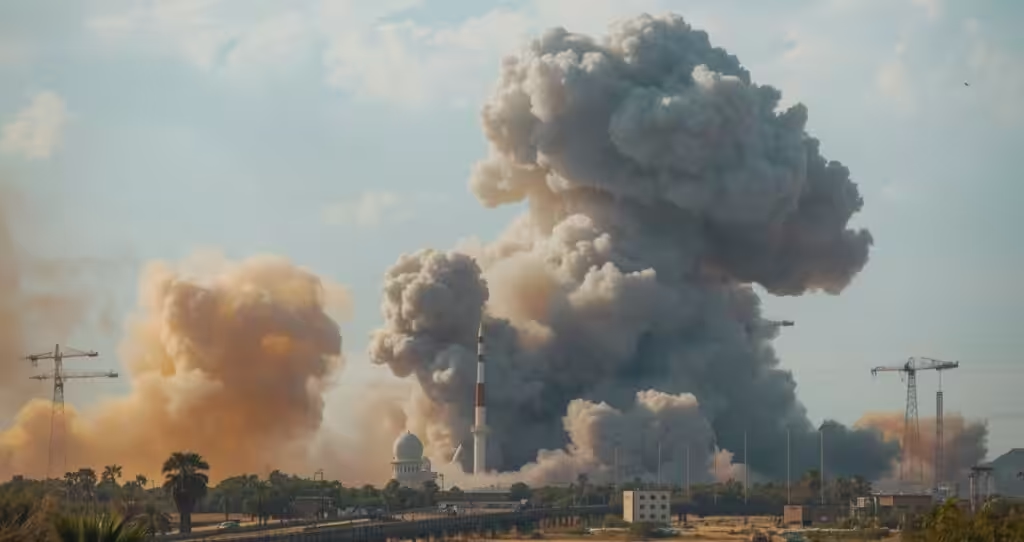
The two week ceasefire, brokered by Pakistan and agreed on April 7, was meant to create space for a diplomatic resolution to the conflict that erupted on February 28 when US and Israeli forces launched a massive air campaign against Iran.
The war has killed more than 3,300 people including 13 US service members, it is estimated.
The first round of talks in Islamabad’s heavily guarded Serena Hotel on April 11 and 12 lasted 21 hours over three sessions, but ended without an agreement, with Iran’s nuclear program and the status of the Strait of Hormuz still unresolved.
Tensions escalate over Hormuz blockade
The truce is severely tested. On 13 April, Trump announced a naval blockade of Iran’s ports in reaction to Iran closing the Strait of Hormuz, through which one fifth of the world’s oil supply passes regularly.
The US Navy attacked and captured an Iranian flagged cargo ship in the strait during the weekend.
The Iranian judiciary chief Gholamhossein Mohseni Ejei described the move as “clearly and undoubtedly” violating the truce.
Moreover, Trump alleged the presence of weaponry from China aboard the Iranian vessel, describing them as a “gift” which was “not very nice” and surprising him a little given his deal with Chinese President Xi Jinping, that China must stop shipments of arms to Iran.
The Iranian parliamentary speaker Ghalibaf, however, responded aggressively and asserted that Trump was trying to make the talks “a surrender table.”
Iran’s foreign ministry spokesman Esmaeil Baghaei called the US naval blockade “unlawful and criminal” and said it was a war crime. He said on Monday that Iran has no plans for the next round of negotiations dismissing US statements about talks as a media game.
Syed Mohammad Ali, a security analyst in Islamabad, told the Associated Press that the Pakistani capital’s arrangements appeared even tighter than for the first round, indicating high level attendance could emerge if talks move forward.
The head of Pakistan’s army, Field Marshal Asim Munir, visited Tehran last week with an apparent message for Iran from Washington.
As analysts have predicted, any outcome of the second set of negotiations would not even come close to reaching a definitive end to the conflict.
Also Read: Iran fires on ships as Strait of Hormuz closes again, Australia faces growing pressure to act
According to Cornelia Meyer, the CEO of Meyer Resources, it was unreasonable to expect a settlement anytime soon since it would take more than two years just to reach an agreement over Iran’s nuclear program in 2015.
“They know their portfolios; our team does not compare to theirs.” With the ceasefire deadline approaching and global oil markets nervous, the international community eyes Islamabad with anticipation.