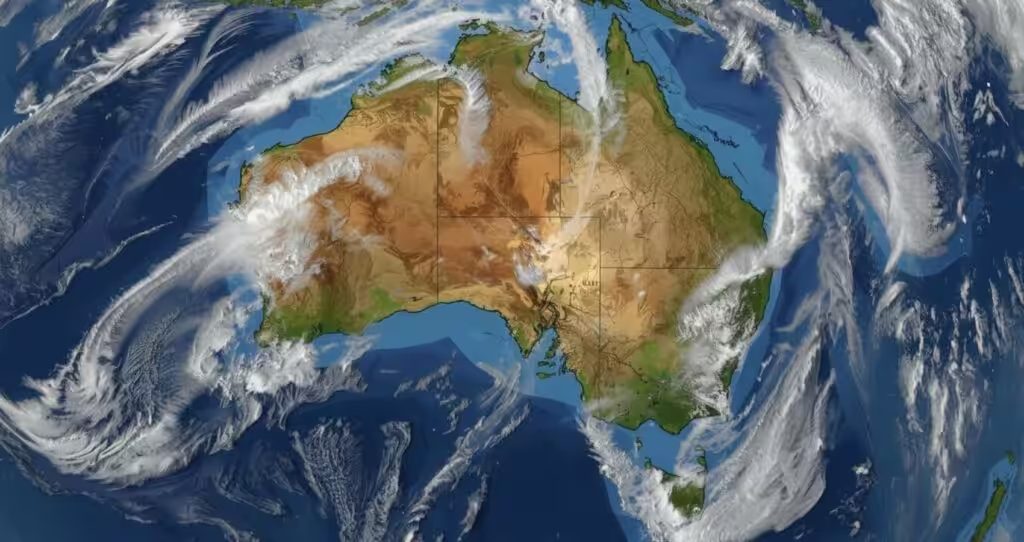

The southeastern regions of Australia are under the influence of a strong weather system that has caused destructive winds, thunderstorms and extremely hot temperatures in Victoria, New South Wales and Tasmania.
The Bureau of Meteorology has released severe weather alerts for damaging winds in parts of the three states, with maximum wind gusts reaching 100 km/h predicted until Friday morning.
The current weather system, formed as a result of a strengthening low pressure trough and a moving cold front, has already produced extreme weather phenomena in Melbourne and Adelaide.
Where Melbourne International Airport recorded rainfall of 13mm in a mere 15 minutes and Adelaide had nearly 20mm throughout the day.
The difference in temperature has been amazing.
On Friday, parts of the NSW coast are expected to have near record April heat, with Sydney reaching 33 or 34 degrees.
That would put it close to the city’s hottest April day on record, which was 35.6 degrees on April 9, 2018.
Inland western NSW and Victoria’s far northwest, on the other hand,reached the low 30s on Thursday, which is much higher than the average for this time of year.
Weather News: Severe storms and snow forecast as cold front barrels toward southeast Australia
The coldest air associated with the front is expected to arrive by Friday evening or Saturday, bringing snow showers to the high country of Victoria, the Snowy Mountains and higher elevations in Tasmania.
The snow might even fall as low as 700 or 800 metres above sea level in Tasmania.
Weatherzone meteorologist Yoska Hernandez first picked up on the system on Easter Monday, noting how typical of a late season pattern the system was.
This type of weather pattern sees a northwest cloudband spread across the entire continent with the front moving through, causing the warmer air in the interior to be pushed south ahead of the front before colder air from the Southern Ocean moves in behind it.
There are further dangers along the coasts of Australia as well.
Large waves formed due to the strengthening low will cause hazardous surf along the coasts of New South Wales and eastern Victoria, with off shore waves possibly reaching six to eight metres in height.
Emergency services are telling people in all three states to secure any loose items outside, stay away from fallen trees and power lines and avoid traveling during the worst of the winds.
People who live near the coast should stay away from exposed headlands, rock platforms and beaches until the weather gets better over the weekend.