
The US Israeli air campaign against Iran entered its 13th day on Thursday without a clear sign of a resolution, despite Washingto claims that it could soon be over.
The conflict started on February 28th with simultaneous air strikes targeting Iran’s military infrastructure and its nuclear program.
However, US intelligence now claims that Iran’s government is still intact despite the killing of Ayatollah Ali Khamenei and other top officials during the initial stage of the conflict.
Violence continued to escalate on Thursday as it became clear that the conflict has now spread far beyond Iran itself.
Iran attacked a container ship off Dubai, caused a fire near Bahrain’s international airport, threatened a major Saudi oil field with drone attacks and attacked Basra which forced Iraq to shut down its oil terminals.
Israel announced that it had carried out a new round of simultaneous air strikes against Iran, while Iran’s missiles and drones forced people into shelters once again, as fighting continued in Lebanon.
Washington and Jerusalem may benefit from the current military balance, but the political outcome is far less certain.
According to Reuters, U.S. intelligence assessments do not believe that Iran’s government is on the verge of collapse, with the Revolutionary Guards and the clerical establishment continuing to hold power following the Assembly of Experts designation of Mojtaba Khamenei as supreme leader.
Meanwhile, the economic impact of the crisis is getting deeper. Brent crude oil rose above $100 a barrel on Thursday after Iran stepped up attacks on shipping and energy targets.
Analysts at ING see no end in sight for the disruption of the flow of oil through the strategic Strait of Hormuz.
The casualty toll is also rising. According to a report, over 1,300 people have been killed in Iran, 634 in Lebanon, 12 in Israel and seven U.S. soldiers have been killed, with another eight severely injured.
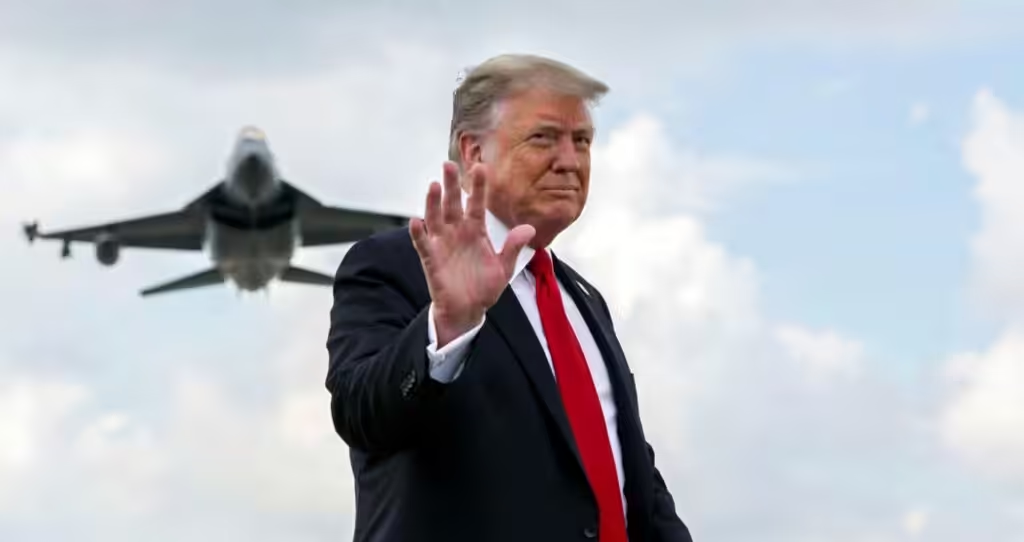
President Trump said that the war could end soon as there is nothing left to destroy, but Iran is hinting that it will only end when it is given due recognition of its rights, reparations and security guarantees.
After almost two weeks of bombardment, the crisis is no longer a short sharp war but a regional war.