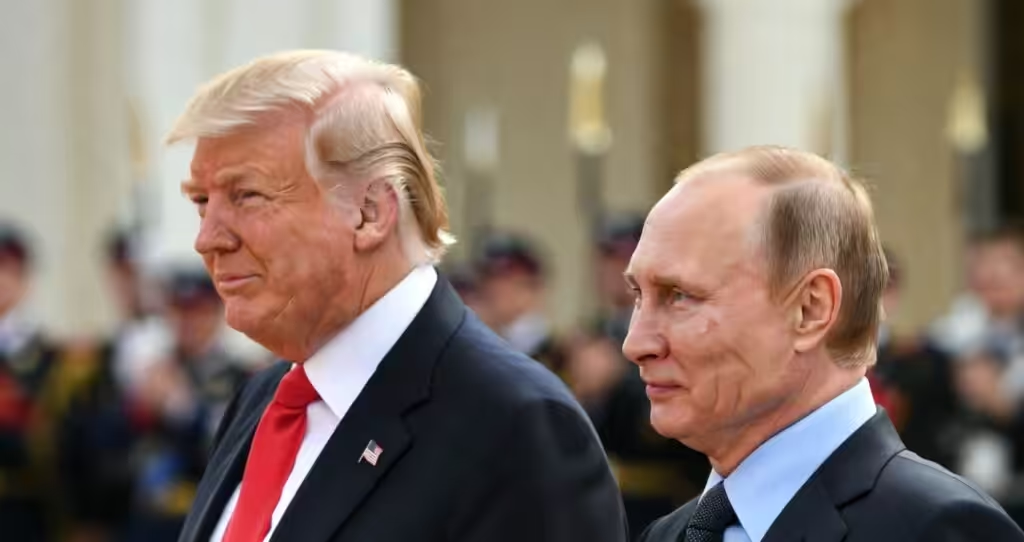

The UK has publicly associated Vladimir Putin with the developing drone strategies being employed by Iran in the Middle East.
This comes after a series of drone attacks were carried out around the city of Erbil in northern Iraq.
Mr. Healey stated that British military officials believed Iranian and proxy pilots were using developing strategies employed by the Russian military in Ukraine.
This included the use of Iranian Shahed drones to descend closer to the ground to increase the chances of evading air defences.
There was an attack on Camp Singara, which hosts NATO troops carried out by an Iranian drone.
The attack destroyed a logistics vehicle without causing any injuries. However, the UK’s counter drone team in the city intercepted two other drones.
Since Russia full scale invasion of Ukraine, the military relationship has tightened as evidenced by the charge.
Shahed drones, which Moscow used extensively against Ukrainian cities were supplied by Iran.
These inexpensive, one way attack drones are now a key component of Iran’s retaliation throughout the Gulf, putting the US and its allies up against the same kind of widespread drone threat that transformed the Ukrainian battlefield.
The level of assistance that Moscow is providing to Tehran currently is debatable.
Reuters reported last week that the Washington Post reported that the Kremlin had shared targeting data on U.S. warships and aircraft with Iran.
U.S. special envoy to the region, Steve Witkoff, reported that the Kremlin had informed Donald Trump that it had no intelligence on U.S. military assets in the region to share with Iran.
Also Read: Oil tankers burn as the new Iran leader warns the Strait of Hormuz will stay shut
The rationale for the engagement is obvious. Reuters reported that experts had revealed that the Kremlin had little interest in a confrontation with the U.S. as long as it is busy with the conflict in Ukraine.
However, a protracted conflict in the Middle East is beneficial to the Kremlin as it increases the demand for oil and gas products.
This is the rationale for the warning from Britain. The warning implies that the Kremlin does not necessarily have to be involved in the conflict to shape it.