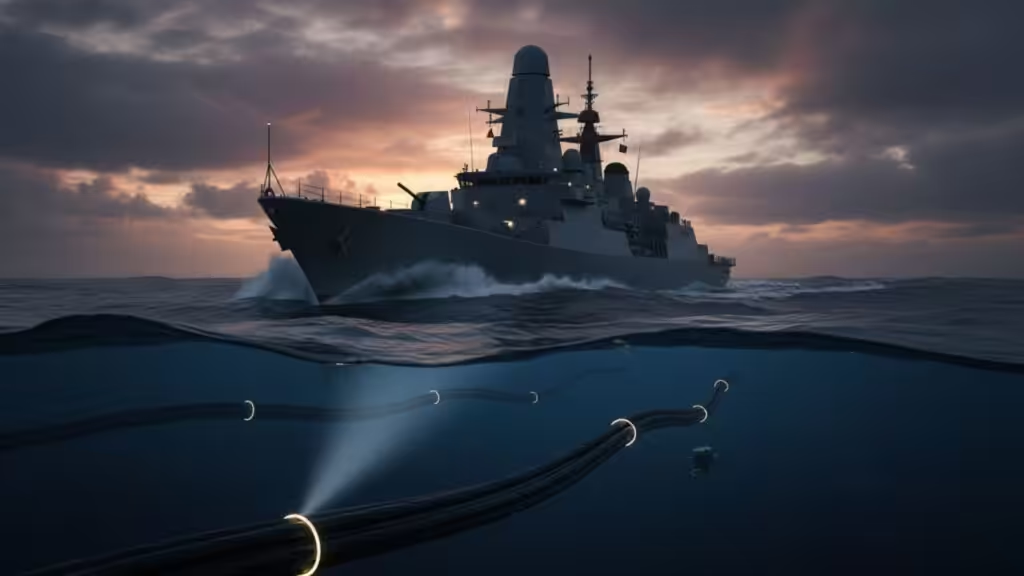

Britain has sent more military patrols to protect undersea cables from possible Russian interference. It is a big change in how the country guards its digital systems.
The Royal Navy has sent warships and surveillance aircraft to watch for submarine activity near fibre optic cables on the ocean floor.
These cables carry about 95% of the world’s international data traffic that makes them a valuable target during times of tension.
Defence officials are worried about Russian submarines moving close to cable routes in the North Sea and North Atlantic.
Moscow has not been publicly blamed for direct sabotage but several cases of damaged cables in European waters over the past two years have put NATO allies on alert.
The UK’s decision to strengthen its undersea defences shows that Western governments now accept that important infrastructure goes well beyond land borders.
Without these cables, financial markets, communications networks and government systems would face serious problems.
Military leaders have said the effort is part of a longer term plan, not a reaction to one event.
Other allied nations including Norway and Denmark have also stepped up their sea patrols in the area.