
For most of the past year or so, the so called TACO trade has been one of the safest bets on Wall Street.
Every time Donald Trump spooks markets with some new threat, whether on trade or territory, the smart money has been waiting for the inevitable reversal and reaping the benefits.
The acronym, coined in mid 2025, stood for “Trump Always Chickens Out” and it has come to symbolize a pattern of behavior: escalate, terrify then walk it back and claim victory.
This strategy has been working wonderfully in the trade wars.
Trade policy, by its very nature is a lever that can be switched on or off with a single tweet.
Through a combination of calculated brinkmanship, Trump has managed to extract concessions from Brazil, India, Japan and others without ever letting the market fall too far.
The standoff over Greenland has also followed a similar pattern: bluster gave way to a small basing agreement once Europe pushed back.
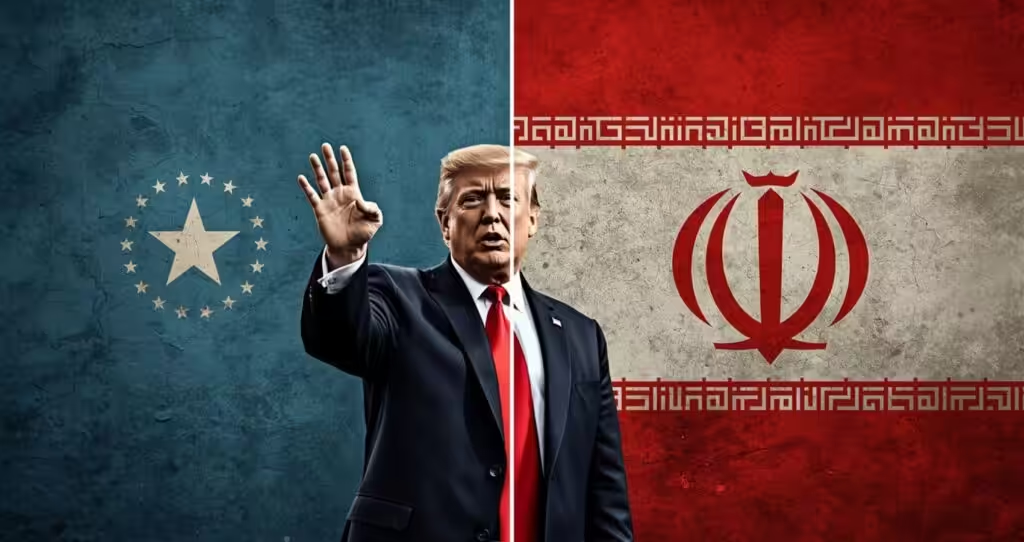
However, a month into the US Israeli war against Iran, the TACO formula is running a foul of an enemy and a conflict type that won’t cooperate.
War doesn’t change
The main issue is that Trump put Iran at a disadvantage.
Attempts to assassinate Iranian leaders from the past, present, and future marked the start of the war and Trump twice exploited the pretense of diplomacy to allow military strikes, undermining any confidence that might support talks.
Iran’s government, though battered and bruised, has shown no signs of wanting to play ball.
Within hours of Trump’s announcement last week of 15 points of agreement, Iranian media denied that any talks had taken place.
This has been the pattern all month. Trump has said there were “very strong talks” with Iran, set deadlines and even hinted at a Middle East peace summit in Pakistan and said the war was “very complete.”
Each time, markets have rallied in response to the hope of de escalation, only to have Iran reject the premise entirely.
Now, analysts say the TACO trade itself is failing, and investors are growing more and more doubtful that this president can talk his way out of a war.
As of right now, the price of gasoline in the US has surpassed $4 per gallon for the first time since 2022, and the price of oil is currently around $115 per barrel, up almost 60% since the conflict started on February 28.
Due to Iranian strikes on Middle Eastern producers, aluminum prices have reached a four year high.
Japan has started releasing about 80 million barrels of its national oil reserves, the largest amount ever, while the OECD has cautioned that the UK will suffer the greatest economic harm of any major economy as a result of the conflict.
The most charitable view of the current situation is that both parties have gotten to the point where the cost of further escalation is so apocalyptic that they need a way out.
Pulling out of the conflict would leave the Gulf States vulnerable to Iran’s ire.
Sending ground troops would mean resurrecting the very forever wars that Trump made his brand on being against.
Trump’s political weaknesses at home are also becoming more pronounced, particularly as American voters begin to tie the conflict to rising petrol prices.
The uncomfortable truth, as several analysts have pointed out, is that it takes two to TACO.
Trump can unilaterally remove a tariff. He cannot unilaterally remove himself from a conflict with a regime that has made its survival tied to defying America and has the geographical position of the most important oil chokepoint in the world to prove it.