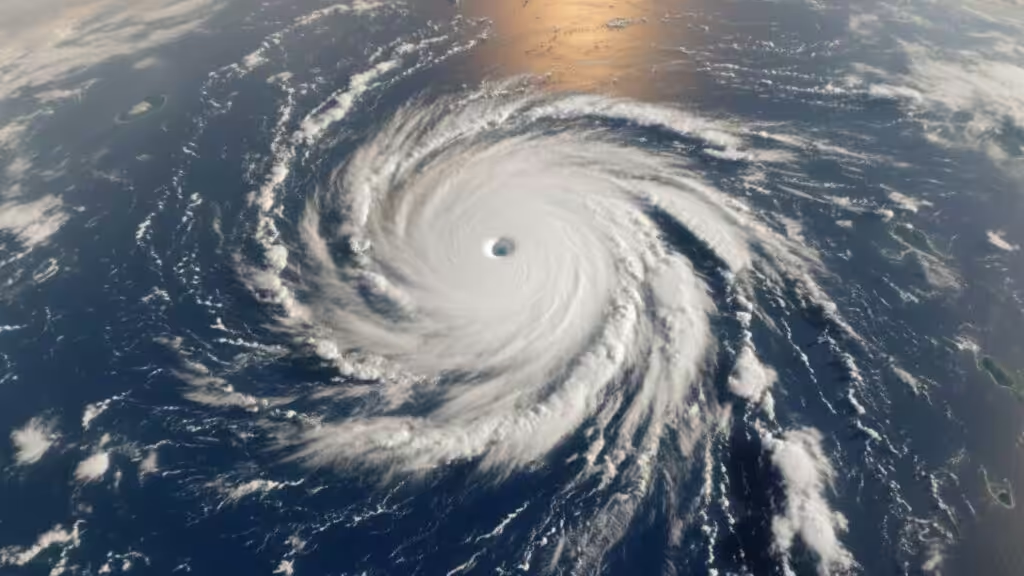

Western Australia faces a long and expensive recovery after Cyclone Narelle tore down the state’s northwest coast. The storm destroyed homes, ruined farms and shut down major gas facilities.
The tourist town of Exmouth, about 1,250km north of Perth on the North West Cape got hit the hardest. The category four system brought winds above 250km/h on Friday before it crossed the coast near Coral Bay as a category three storm.
So far, four buildings have been confirmed destroyed and 27 damaged. Authorities expect those numbers to go up as they check more than 2,000 properties in the area.
About 50 people sheltering at an evacuation centre in Exmouth had to move to another location after the wind damaged the building they were in. It showed just how fierce conditions got overnight.
The state government has made emergency payments of up to $4,000 available to affected residents. The money can be used for things like temporary housing and transport.
Premier Roger Cook activated the state’s highest level emergency response. He also asked tourists not to cancel their plans for the coming Easter break and encouraged them to keep spending in regional towns.
The food growing region near Carnarvon about 900km north of Perth took a heavy hit. Jo Bumbak, owner of a local farm and produce store told on Sunday that corn crops had been completely flattened and tomato seedlings destroyed by wind. She added that a nearby avocado grower had been totally wiped out.
As of Sunday, about 1,400 properties in Exmouth still had no power. Horizon Power warned that some areas could go without electricity for a long time because of access problems and safety risks.
Emergency crews were focused on getting power, water, transport and communications back up across the affected area.
Also read: Kimi Antonelli Just Shocked the World and Became the Youngest F1 Championship Leader Ever.
Three major LNG facilities that together produce about 8% of the world’s liquefied natural gas were forced to cut output.
Chevron said it shut down one of three production units at its Gorgon plant, along with a platform that feeds its Wheatstone facility. Woodside said production was stopped at its Karratha gas plant, which processes gas for the North West Shelf project.
Narelle followed an unusual path that made it one of the biggest cyclone events in recent years. The system hit land separately in three states and territories between 20 and 23 March.
It first struck Queensland as a category five, then weakened and crossed the Northern Territory. It reformed over the Indian Ocean and headed for WA’s coast.
The Bureau of Meteorology said a tropical cyclone reaching this far south in Western Australia is rare. The last similar event was Cyclone Seroja in 2021.
Authorities reported no serious injuries or deaths as of Sunday that was a remarkable result given how strong the storm was. But the cleanup in Exmouth alone could take weeks. The full cost to farming, tourism and energy exports is expected to keep rising in the days ahead.