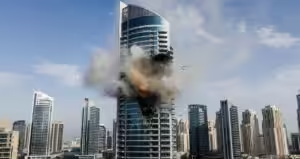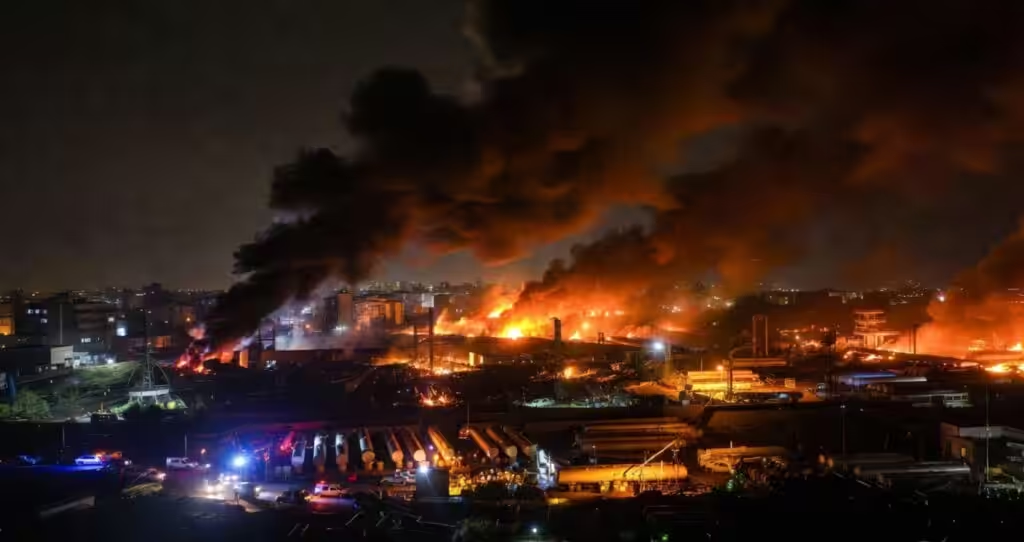

Overnight airstrikes targeted fuel facilities near the Iranian capital, Tehran woke up on Sunday to choking black smoke and fire, sending plumes over the skyline.
This heightening concerns that the conflict has reached a more dangerous stage.
Attacks that Iranian and international reports linked to Israel, residents described a smoke-filled city with flames visible from storage facilities and refinery areas.
At least four people were killed in attacks on four oil storage facilities and a petroleum transfer terminal, according to Iranian authorities.
After days of attacks on military and strategic targets elsewhere, the strikes seemed to be one of the most obvious attacks on Tehran’s civilian industrial infrastructure.
Following the explosions, there remained an immediate threat to the people in addition to the explosions.
The Iranian Red Crescent has warned residents that there will be new dangers from air pollution as well as from the possible formation of acid rain.
There also have been reports from within the city itself regarding a continuing chemical haze along with worries about being able to breathe properly.
Furthermore, Iranian officials have claimed that the size of this attack has opened what they term as a `dangerous new phase’ in the ongoing conflict, with their Ministry of Foreign Affairs condemning it as a war crime.
Reuters has reported that the fighting that has been taking place throughout the region has already disrupted oil and gas flows throughout the region, damaged shipping through the Strait of Hormuz, and caused crude oil prices to increase substantially.
However, the devastation above was more important to Tehranis than the worldwide repercussions.
The most immediate reality was a smoke covered capital, air emergency alerts and the feeling that a conflict that was previously measured in missiles and military locations was now being felt block by block throughout one of the largest cities in the Middle East.