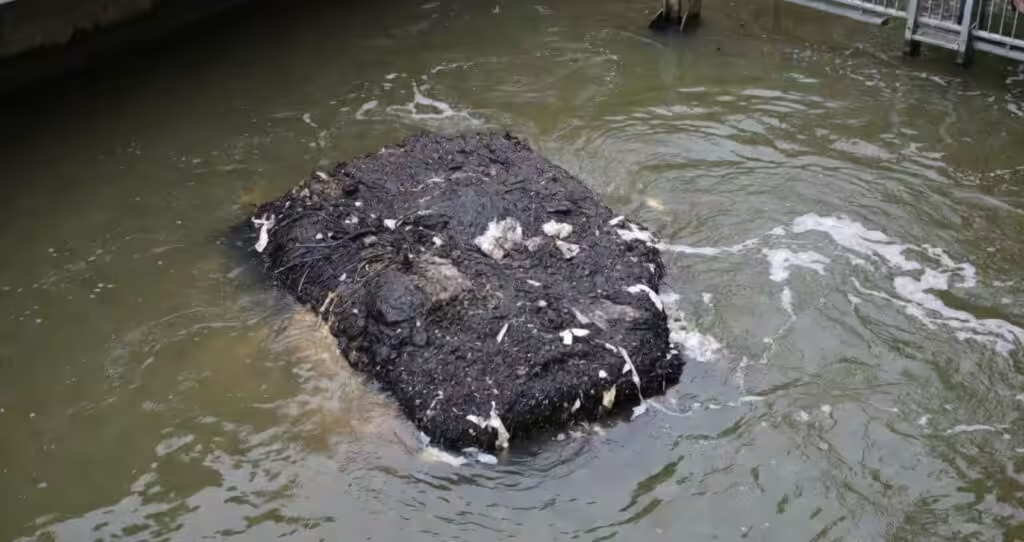

An effort to prevent more sewage related debris balls from washing up on beaches, the state environment regulator has ordered Sydney Water to remove a significant accumulation of fats, oils and grease from a portion of its Malabar wastewater system.
The Malabar Deep Ocean Outfall bulkhead area has been identified as a likely source of the debris balls that have been appearing intermittently since October 2024.
NSW Environment Protection Authority said it has issued Sydney Water a Pollution Reduction Program requiring significant works at this location.
Through late 2024 and early 2025, closures were implemented along portions of the Sydney coastline and beyond due to the foul smelling lumps.
It is thought that the fatberg is located close to the ocean outfall in a difficult to reach tunnel segment.
Although it may be as big as four Sydney buses, Sydney Water has previously stated that it cannot safely reach the main blockage and is unsure of its precise size.
Instead of closing the outfall, the corporation uses remote equipment to inspect and try to remove the area, which is normally underwater and only accessible at low tide.
Sydney Water has warned that beach closures for months may result from the need to divert flows in order to switch off the deep ocean outfall for maintenance.
Nevertheless, in an effort to lower the possibility of additional releases, the company has already eliminated a significant amount of content from areas that are accessible in recent years.
More NSW News: Man and teen charged over shooting of former NRL player Matt Utai
Sydney Water must continue its fat removal efforts and conduct at least 18 inspections over a three year period starting in April 2026 as part of the EPA’s order.
In order to relieve pressure on the aging network, the NSW Government is implementing a $3 billion, ten year upgrade of the entire Malabar system, which includes significant work at the Glenfield and Liverpool facilities.
Darren Cleary, managing director of Sydney Water, stated that while the utility is trying to reduce the risk, it cannot guarantee that debris balls won’t reappear.