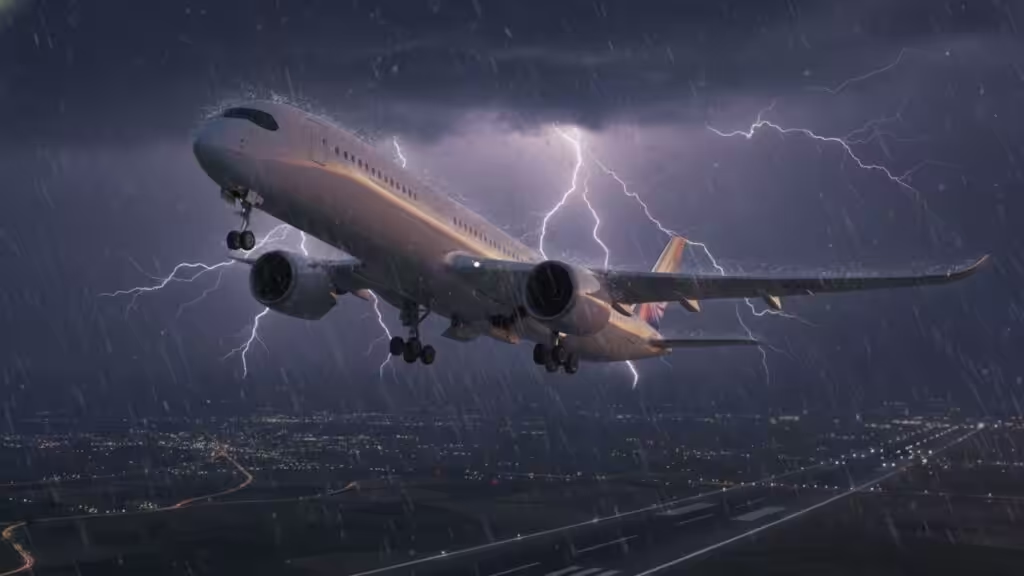

A powerful bomb cyclone hit New South Wales hard throwing Sydney into chaos. The city’s main airport was forced to shut down all but one runway, and dozens of domestic and international flights were grounded.
The Bureau of Meteorology warned that wind gusts could reach 125 km/h which is similar to the wind speeds seen in a tropical cyclone. Heavy rain was expected to dump between 100 and 120 mm in just 3 to 6 hours.
Some areas could get up to 299 mm over 48 hours that is roughly double what Sydney normally gets in all of July. Weather experts said a system like this has not been seen in decades.
Airservices Australia switched Sydney Airport to single runway operations because of strong south westerly winds. The agency said the move followed International Civil Aviation Organisation safety rules for bad weather.
Virgin Australia cancelled 12 flights. Jetstar confirmed eight cancellations on Tuesday morning and warned of more delays on routes in and out of NSW.
Qantas said it was watching the weather closely and expected more cancellations at Sydney. Flights between Brisbane, Sydney, Canberra and Melbourne were among the hardest hit.
The damage went well beyond the airport. Ferries between Manly and Circular Quay were cancelled. The Palm Beach to Ettalong and Wagstaffe ferries were sent to Patonga instead and would stay there until Thursday because of swells expected to reach up to five metres.
NSW SES state operations manager Dallas Burnes said teams had responded to more than 600 incidents in the past 24 hours. Over a thousand volunteers were already out helping communities.
He said he was especially worried about flash flooding during the afternoon commute. He warned that conditions would get worse as rain picked up through the day.
Coastal communities from the mid north coast to the far south coast were told to get ready for dangerous surf, erosion and possible damage to buildings.
Warragamba Dam, Sydney’s main water supply, reached 98% capacity and was expected to overflow overnight which raised fears of more flooding in nearby suburbs.
This system’s pressure dropped between 22 and 24 hectopascals a day, well above the level needed to be called a bomb cyclone at this part of the world.
The storm was expected to last into the middle of the week. Travellers were told to check with their airlines before going to the airport.
For many people in Sydney, the message from authorities was simple: if you do not need to go out, stay home.