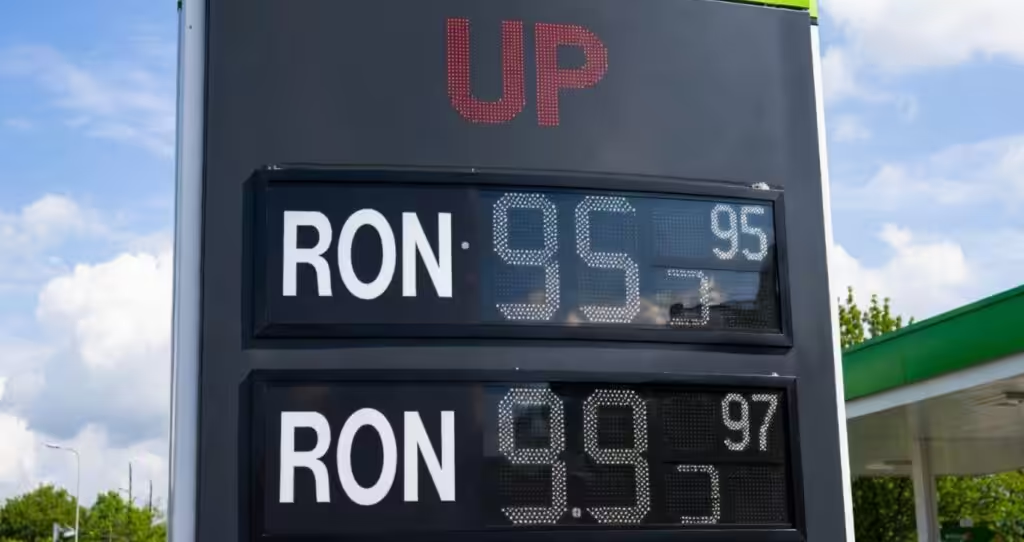

Australian motorists are facing a new fuel price shock, with a Sydney servo briefly quoting a price of 299.9 cents per liter for premium 98 fuel on Friday, just 0.1 cent below the magic figure of $3 a liter.
The price was advertised at a servo in Georges Hall in the city’s west, just a week after the average price for premium 98 fuel in NSW was recorded at 202.7 cents a liter.
The overall market had been trending upwards before the eye catching reading was recorded.
The Australian Institute of Petroleum reported that the average retail petrol price across the country was recorded at 181.0 cents a liter in the week to March 1, up 10 cents from the previous week.
The average price in the state capitals was also high, with Melbourne averaging 195.2 cents a liter and Brisbane averaging 201.6 cents a liter.
Since then, the ABC reported that half of the Sydney metropolitan area’s petrol outlets were at or above 217 cents a liter, Melbourne was at around 219 cents a liter and over 210 outlets in south east Queensland had lifted their prices to 219.9 cents a liter.
Brent crude oil settled at US $81.40 a barrel on March 3, its highest close since January 2025 and later rose again to US $85.41 on March 5 after the war, which involves Iran disrupted shipping and energy movements in the Strait of Hormuz.
Also Read: Markets, oil shock fears loom over Trump as Iran war drags on
According to Anna Brakey, the ACCC commissioner in a media release, “The ACCC will not hesitate to take action if representations and market behaviour by a petrol company contravene competition and consumer laws.”
The most extreme figures are found in premium fuel and the upper end of city price cycles and not every driver is going to pay $3 per litre.
However, the Sydney signboard has come to serve as a stark reminder of how quickly local prices can rise when an already unstable retail market collides with worldwide oil shocks.
The next few weeks will determine whether that near miss sets a new standard because wholesale costs are still coming through.