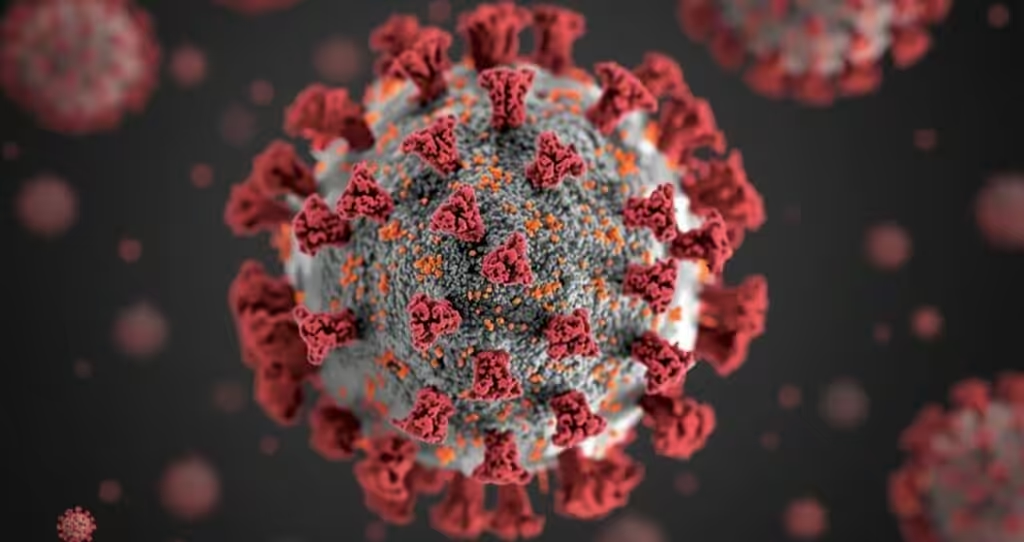

A newly discovered COVID variant that has been infecting people across the United States and Europe has now been found in Australia, and health officials are intensifying their surveillance efforts as Australia is entering winter.
The COVID variant, which is now known as BA.3.2 and called “Cicada,” first appeared in South Africa back in November 2024 but remained dormant for several months before resurfacing recently.
BA.3.2 stands out among other COVID variants due to the large number of mutations it has developed.
Researchers estimate that the new strain carries between 70 and 75 mutations in the spike protein when compared with the dominating COVID strains.
It is yet unknown whether people who have been vaccinated or previously infected with COVID will be immune to the new variant.
According to research conducted by The Lancet, current vaccines may not provide adequate protection against the new variant.
The variant has not yet been identified as a major strain in Australia, but previous waves have consistently arrived on local shores after first taking hold overseas.
BA.3.2 has been found in at least 25 states in the US and in parts of northern Europe, it has caused about 30% of infections in the last few months.
“Nimbus” or NB.1.8.1 has been dominant since May 2025 and accounts for 72% of sequenced samples in Australia’s genome surveillance data.
“Stratus” or XFG variant was classified as a variant under monitoring by the WHO late last month and constitutes roughly 5% of Australian samples.
In any case, the appearance of the new variant, “Cicada,” brings extra complexities to what has been an eventful respiratory disease season so far.
BA.3.2 has been identified through wastewater testing in Perth as early as September 2025, when it constituted about 8% of samples before going on to account for 20% of samples.
While the extensive mutation of BA.3.2 raises concerns, there have been no indications of more severe disease symptoms associated with the variant at the moment.
Current information shows that the new variant poses little additional public health threat than other existing subvariants of Omicron. Common symptoms include sore throat, tiredness and cold.
The more significant issue for public health professionals relates to the low rate of vaccinations within the population group that faces the greatest risk of contracting severe illness.
Nationally, the vaccine booster rate among Australians over 75 is just 13.4% over the last six months, whereas people older than 75 are supposed to receive a vaccine booster shot every six months
Currently, testing is no longer mandatory, but a personal choice and not all cases are reported.
In addition, wastewater screening and genomic testing in hospitals have become the main methods for detecting the strains and estimating their growth rate.
Now that the winter season is approaching and Australians are spending more time inside their homes, specialists are encouraging individuals who fall under high risk categories to verify if they need boosters.
Staying at home while sick, conducting a self test using a rapid antigen test upon experiencing symptoms and putting on masks in enclosed spaces are still the most realistic actions one can take.