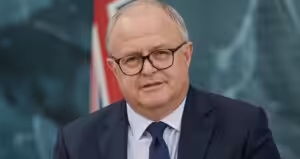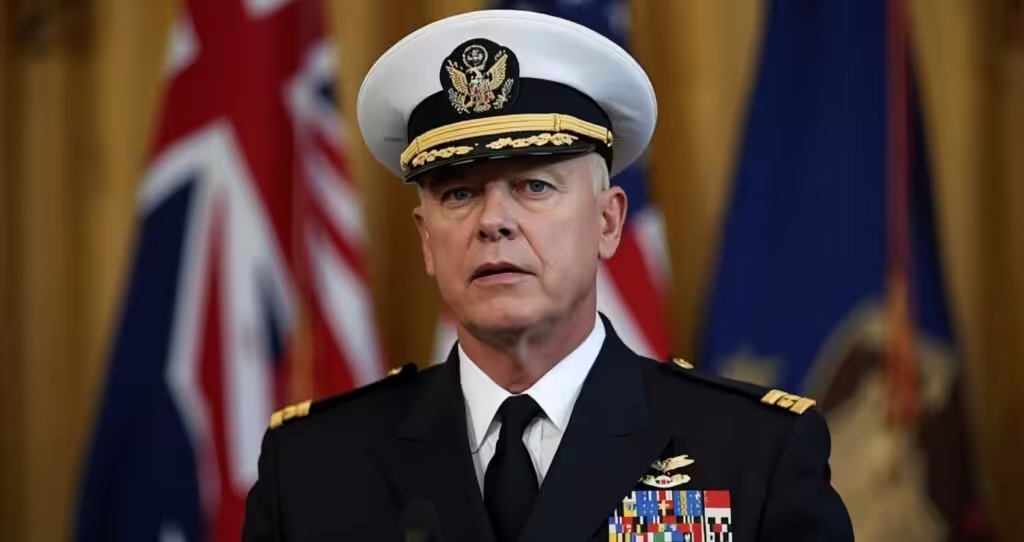

Chief of Navy, Vice Admiral Mark Hammond, has been chosen to serve as Australia’s next Chief of the Defence Force.
The appointment was made by Prime Minister Anthony Albanese at a press conference in Canberra yesterday.
In his announcement, the PM revealed that Vice Admiral Hammond will take up the mantle of leadership within the military organization from July, succeeding outgoing General David Johnston.
This appointment comes following more than four decades of dedicated service within the nation’s armed forces.
Having enlisted in the Royal Australian Navy as an electronics technician in 1986, Vice Admiral Hammond made the move into commissioned officer rank two years later.
Later on, he served as chief of staff to then Defence Force Chief David Hurley in 2012 and commander of the navy from July 2022 onwards.
As commander of the navy, Vice Admiral Hammond was instrumental in overseeing the progress of AUKUS nuclear submarine program, arguably the most ambitious defence project in Australia’s history to date.
The Prime Minister told reporters that the new defense chief has a good record. “Vice Admiral Hammond has had a great career in the Royal Australian Navy for 40 years,” Mr. Albanese said.
Richard Marles, the Minister of Defence, was just as direct when he said that Hammond’s career arc told its own story.
Vice Admiral Hammond said, “This is probably the most humbling moment in my career,” acknowledging how important the job was.
In addition to the most senior appointment, Mr Albanese has chosen Susan Coyle, who is currently the Chief of Joint Capabilities as the future Chief of Army.
This will make her the first ever female occupant of the position, making history within the Australian Defence Force.
Meanwhile, the current Deputy Chief of Navy, Rear Admiral Matthew Buckley, will take charge of the navy after the promotion of Vice Admiral Hammond.
This appointment takes place amid increased rivalry in the Indo Pacific region and the need for Australia to expedite its military modernisation efforts.
Vice Admiral will take control of a defence force that faces issues regarding recruitment, significant procurement programmes and the intricate AUKUS agreement with the United States and the United Kingdom.