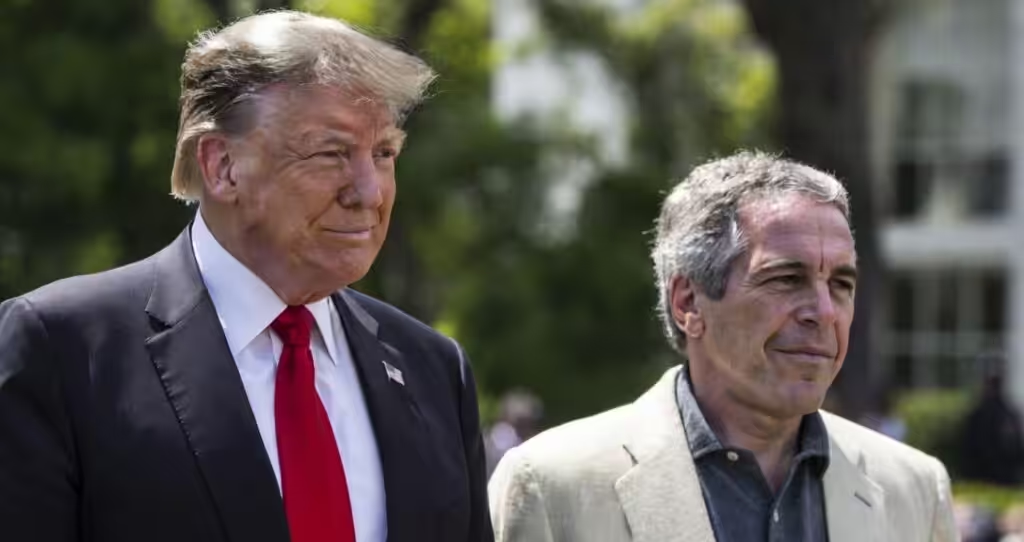

US Department of Justice has released additional files from the Jeffrey Epstein case after the US Justice Department admitted that files relating to an uncorroborated accusation against President Trump were omitted from the earlier release of the files.
The Department of Justice stated that the files were mistakenly coded as duplicate files and were released again in response to media inquiries and political pressure over the lack of information in the files released earlier.
Additional files were released under the Epstein Files Transparency Act, with the Department of Justice announcing in January that it had released nearly 3.5 million pages of files and would consider releasing more files if additional files were located.
The newly released files include FBI interviews from 2019 with a woman who contacted the FBI after the arrest of Jeffrey Epstein.
The woman gave a detailed statement in a later interview, in which she claimed that she was taken to either New Jersey or New York by Epstein and that she had bitten Trump when Trump attempted to sexually assault her.
Woman refused to give any details about her alleged encounter with Trump and then stopped cooperating with the investigators altogether.
Files, however, state that there was no indication that Epstein ever lived in South Carolina, where she claimed some of the abuse occurred, and it was not clear if Trump and Epstein knew each other at the time she claimed.
The Associated Press, as well as ABC, stated that the claim was unsubstantiated. Trump has continued to deny any wrongdoing regarding Epstein, and law enforcement has not charged him with any wrongdoing.
Most recent disclosure increases pressure on Attorney General Pam Bondi, who has come under fire from both Democrats and Trump’s own party for the way she handled the Epstein files.
This indicates that the administration’s piecemeal release of the files has turned into a political issue in addition to a transparency issue.
Opponents claim the department has withheld, excessively redacted or improperly handled portions of the archive, while officials contend that given the scope and speed of the review, errors were hard to prevent.