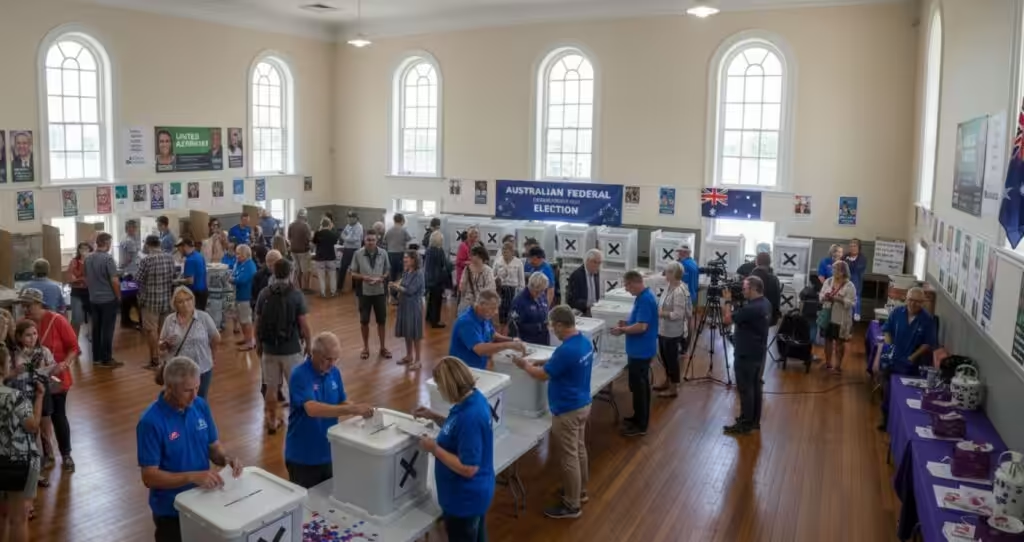

South Australians are voting today in an election where every survey indicates a decisive victory for Peter Malinauskas and Labor.
The Premier’s approval ratings are in the mid 60s. His two party lead is greater than 18 points and on paper, it is a coronation for Malinauskas.
But scratch beneath the surface, and it is a different story. Labor’s flagship commitment in 2022 to fix ambulance ramping at South Australia’s hospitals has been spectacularly ignored.
The total hours of ramping have never been higher, reaching a new record of 52,000 hours in 2025 almost doubling the 28,000 hours experienced in 2021 when Labor was in opposition.
South Australians are also concerned about cost of living issues. South Australians have the highest electricity costs in the country.
Adelaide is now ranked as one of the least liveable cities in the world for housing affordability. Labor’s last budget provided a paltry $118 million for cost of living relief.
Pauline Hanson’s party consistently receives between 22 and 28% of the primary vote, surpassing the Liberals who hover around 14 to 20%.
According to seasoned analyst Antony Green, the crucial question is whether polls are gauging actual voting intention or just disillusionment.
The Liberal Party is in a terrible position going into this election. Ashton Hurn, the fourth leader since 2022 took more than 103 days before election day.
Only 13 of the 47 seats in the House of Assembly are held by the party and several are seriously threatened by One Nation, Labor and independents.
In regional areas, strong independent candidates in seats such as Flinders and Ngadjuri could disrupt the status quo.
With a record 436 candidates in both chambers, five parties competing in every lower house electorate and a highly unpredictable preference pattern, the results are anyone’s guess.
But what of the upper house? A possible outcome is that One Nation could win a number of seats in the Legislative Council, giving Hanson’s party a veto over legislation, even if Labor’s Malinauskas is in charge with a big majority in the lower house.
It is by no means a guarantee that Labor will lose, but a landslide victory with a hostile crossbench is a very different mandate to what might have been anticipated by Malinauskas a year ago.
And if the One Nation vote holds at anywhere close to current polling, the effects will be felt far beyond South Australia.
The favourite to win might emerge, but on their own terms? That is a very different matter.