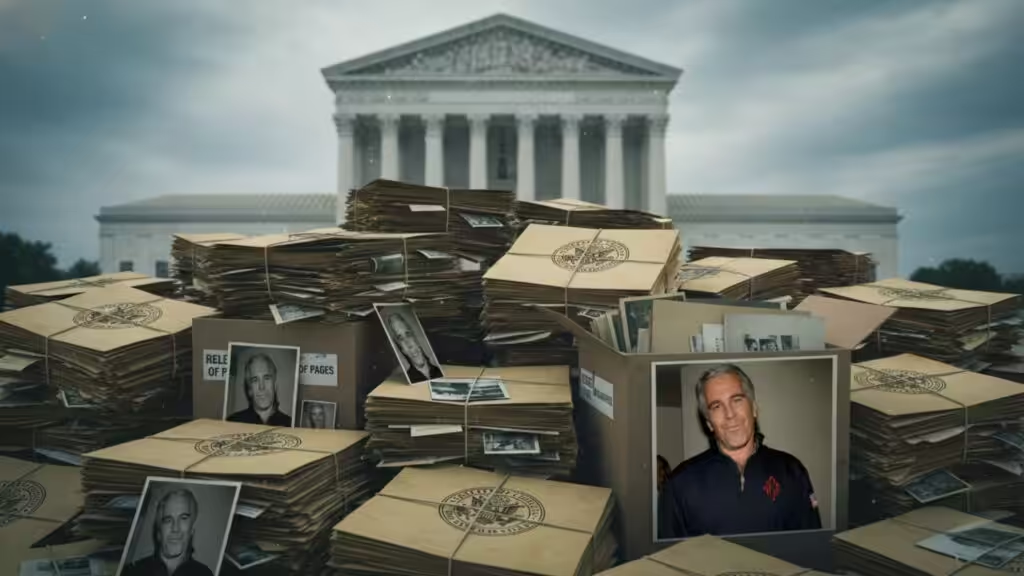

Millions of pages of documents tied to the late US financier Jeffrey Epstein are now being published online through a dedicated “Epstein Library” run by the U.S. Department of Justice.
The release follows new transparency legislation requiring the Department to publish Epstein-related material, with limited exceptions.
The DOJ says the latest publication adds more than three million pages, plus thousands of videos and a large image archive, and brings the total public production to nearly 3.5 million pages.
The Epstein Files Transparency Act was signed into law on 19 November 2025, and the Department says it has built the library to keep adding files if more releasable material is identified.
Epstein Library Officially Available on U.S. Department of Justice
Download Jeffrey Epstein All files from Department of Justice Website.
The first hurdle is an age gate. Visitors are asked to confirm they are 18 or older before they can proceed, reflecting the Department’s warning that some records describe sexual assault and other sensitive material.
From there, the site is organised into four main pathways: a whole of library search tool, Court Records, DOJ Disclosures and Freedom of Information Act releases, plus an external link to material published by the House Oversight committee.
Search can be useful for names, places or keywords, but the DOJ cautions that technical constraints and formats such as handwritten documents mean results can be incomplete or unreliable.
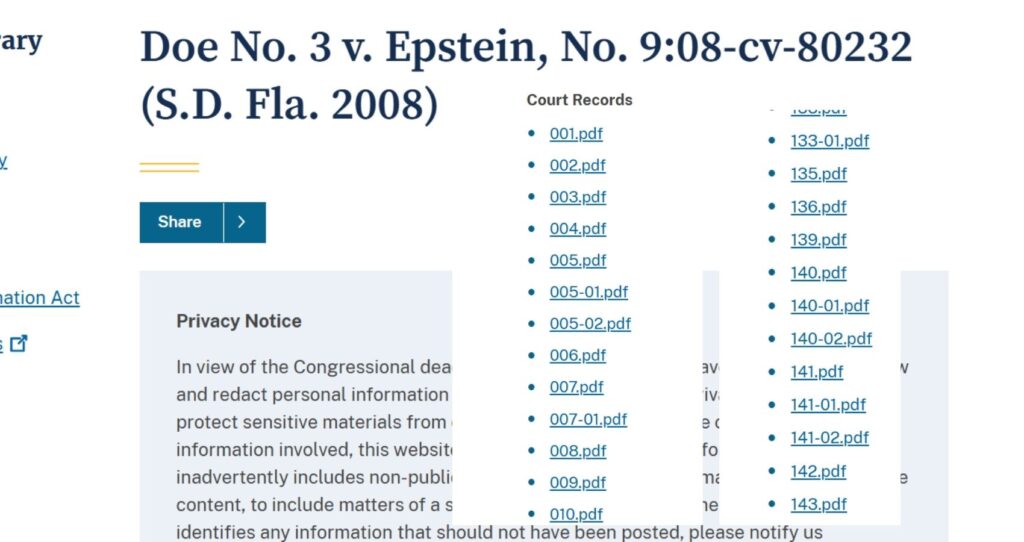
Under Court Records, documents are grouped by individual lawsuits and dockets, with each case displaying long lists of numbered PDFs.
Some matters run into the hundreds of separate files, with entries numbered well beyond 200, and additional parts labelled with suffixes such as “-01” and “-02”.
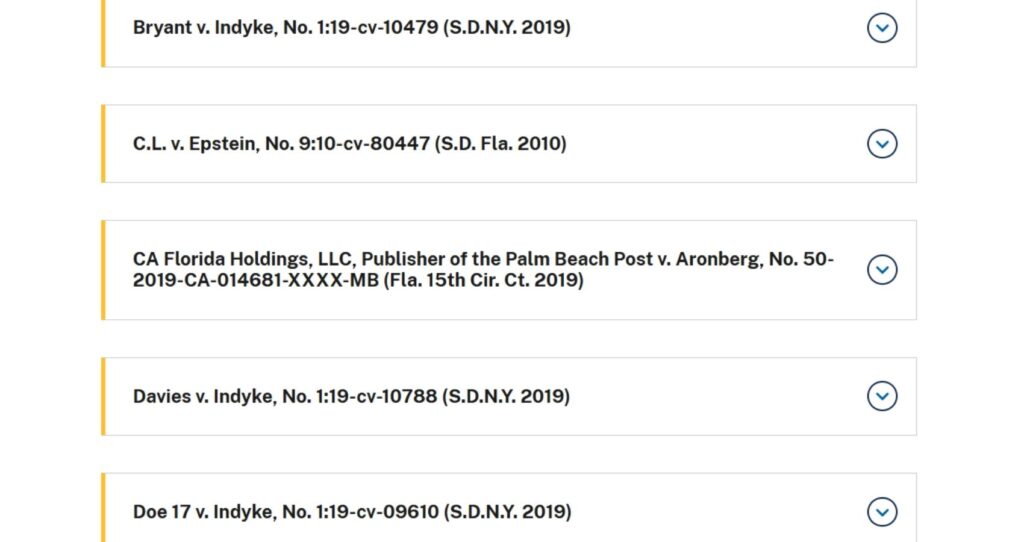
The site also flags that cases with more than 100 associated documents may be pushed to their own dedicated page.
The DOJ Disclosures section is structured differently. It offers “data sets” linked to the Act, and for several sets provides a single “download all files” zip alongside a “view files” option, a practical shortcut for anyone who wants the whole bundle rather than clicking file by file.
Across the library, the DOJ says it has applied additional redactions to protect victims and other private individuals, marking them as “DOJ Redaction”, and it asks the public to report any sensitive information that appears to have slipped through by contacting its dedicated email address listed on the site.