The temporary ceasefire which lasted two weeks between the United States and Iran was called for by Pakistan after 40 days of fighting.
However, this ceasefire almost collapsed just a few hours after its announcement when Israel initiated its largest strike on Lebanon since the outbreak of war.
The ceasefire agreement was made known by the Prime Minister of Pakistan, Mr. Shehbaz Sharif.
According to him, the two countries involved were commended for choosing peace over violence.
He further called the two countries for formal talks at the end of a week on Friday, 10 April 2022, at Islamabad to reach a comprehensive solution to the issue.
Also, Iran assured to allow ships pass through the Strait of Hormuz for the duration of two weeks.
On Wednesday, Israel made a large scale strike attack on the Lebanese capital city, Beirut, for the first time since the outbreak of the war claiming the destruction of more than 100 sites linked to the Hezbollah militia backed by Iran.
Civil defense officials in Lebanon claimed that over 250 people were killed and 1,160 wounded as a result of Israeli attacks on the country.
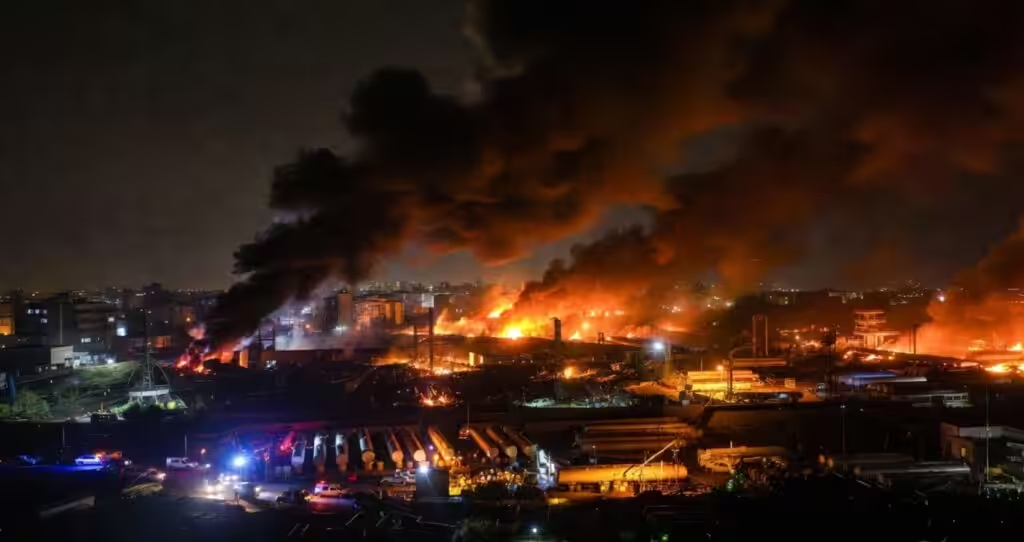
Iranian state media said the strikes were retaliation for the bombing of Iranian oil facilities.
Iran formally accused the United States of breaching the ceasefire. This dispute attracted criticism at an international level.
For instance, Emmanuel Macron of France noted that the attack would lead to a direct challenge of the sustainability of the ceasefire, saying that Lebanon should be considered as well.
Volker Türk from the UN High Commissioner for Human Rights said that the extent of killings taking place in Lebanon was nothing but horrific and exerted a lot of pressure for peace.
Moreover, Kuwait recorded 28 attacks using Iranian drones, UAE had to defend itself against 35 attacks, while Qatar intercepted seven missiles and drones.
Abu Dhabi had a fire outbreak at its Habshan gas complex while Saudi Arabia also had one of its pipelines bombed by drones.
According to Mohammad Bagher Ghalibaf, Iran’s parliament speaker, three clauses of the country’s proposal had already been breached even before negotiations started.
Also Read: Trump’s Deadline for Iran Expires Tonight as War Enters Its Most Dangerous Phase
Oil futures fell and stock markets rose when the news broke, but analysts warned that the conflict’s economic effects could take months to reverse, even in the best case.
It is still very unclear if the ceasefire will last long enough for real diplomacy to take hold in Islamabad. For now, the guns are still not completely quiet.