From a busy charity kitchen in Sydney’s east to quiet vigils at churches and synagogues around the country, Australians marked a National Day of Mourning for the victims of the Bondi Beach terror attack with food, flowers, candles and a minute’s silence.
The day of observance fell six weeks after 15 people were killed at a Hanukkah gathering at Bondi on 14 December, an attack the Prime Minister has described as antisemitic and a blow to the Australian way of life.
The centrepiece was an invitation only memorial at the Sydney Opera House where family representatives lit candles for each victim and the nation was asked to stop for one minute at 7:01pm AEDT.
Prime Minister Anthony Albanese told the service he was sorry the country could not protect those who died.
Away from the stage and speeches, the day was designed to channel grief into small, practical gestures.
Under the New South Wales government backed One Mitzvah for Bondi campaign, Australians were encouraged to complete a charitable act from checking on neighbours to volunteering time or donating meals.
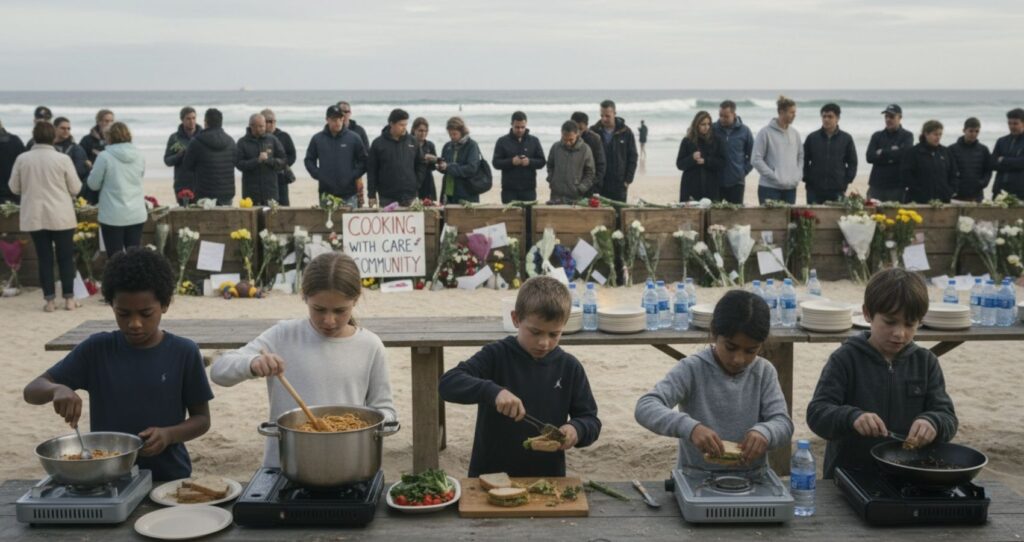
In Paddington, primary school aged children chopped vegetables and stirred pots at Kids Giving Back, a charity that has run weekly sessions since the attack.
The group said about 350 meals prepared on the day would be distributed to vulnerable people in Sydney’s north west.
At Bondi itself, mourners moved through the pavilion precinct near the site of the shooting, leaving wreaths, flowers and small stones in keeping with Jewish mourning tradition.
Foot traffic ebbed and flowed through the day, with visitors stopping quietly before heading back to work, school or holiday plans.
Federal and state governments also leaned on symbolism to make the day feel national rather than local.
Flags were ordered to half mast at Commonwealth buildings and New South Wales government sites, and major institutions in Canberra and across NSW were lit up after dark.
A national lighting installation titled 15 Pillars of Light was also scheduled from sundown to midnight in capital cities and selected regional locations including at Bondi Pavilion and sites in Brisbane, Darwin and Canberra.
The government said the aim was a visible sign of remembrance and solidarity and confirmed the day was not a public holiday.