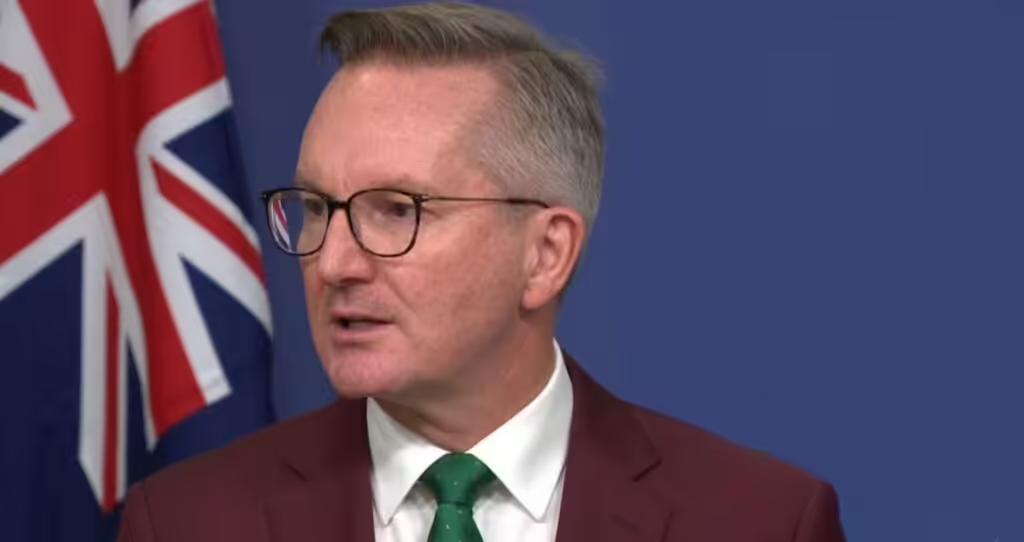

Energy Minister Chris Bowen launched a scathing attack on motorists who are buying and selling petrol at marked up prices, describing it as “un-Australian” and “dangerous” as the federal government introduces further measures to calm petrol and diesel supplies.
This follows as the federal government proceeds with its plans to release a part of Australia’s domestic fuel supplies as it urged people to stop panic buying.
In a move aimed at releasing part of Australia’s fuel supplies, the federal government on Friday announced that it had approved a proposal for the release of up to 20% of the baseline minimum stockholding obligation for petrol and diesel, which translates into as much as 762 million liters of fuel.
Bowen, however said that the fuel will not reach regional towns in the near future as it will still have to go through a “long and complex chain” although its aim is to give more flexibility in these difficult times.
Approximately 100 million more liters of gasoline will be available each month as a result of this change, which raises the permitted sulfur level from 10 parts per million to 50 parts per million.
According to the government, Ampol promised to allocate that additional supply to areas of scarcity, such as local communities, farmers and fishermen who depend significantly on the spot market.
He has stated that the overall fuel position in Australia is secure at present. On March 3rd, he stated that Australia’s petrol reserves were at 36 days, diesel reserves were at 34 days and jet fuel reserves were at 32 days.
Bowen stated that these reserves were at their highest in over a decade. He further stated that all expected shipments were arriving in Australia, even as regional supply chains were being disrupted by a sudden surge in demand.
The reserves in Australia, however, were still significantly low compared to the 90 day reserves set by the International Energy Agency.
Bowen stated that Australians should only buy the fuel that is required and that there was no need for panic buying.
He said that while there were still further risks that could arise in the future in the event that the Middle East conflict escalates, governments should be preparing for that eventuality and should not be fueling fears.