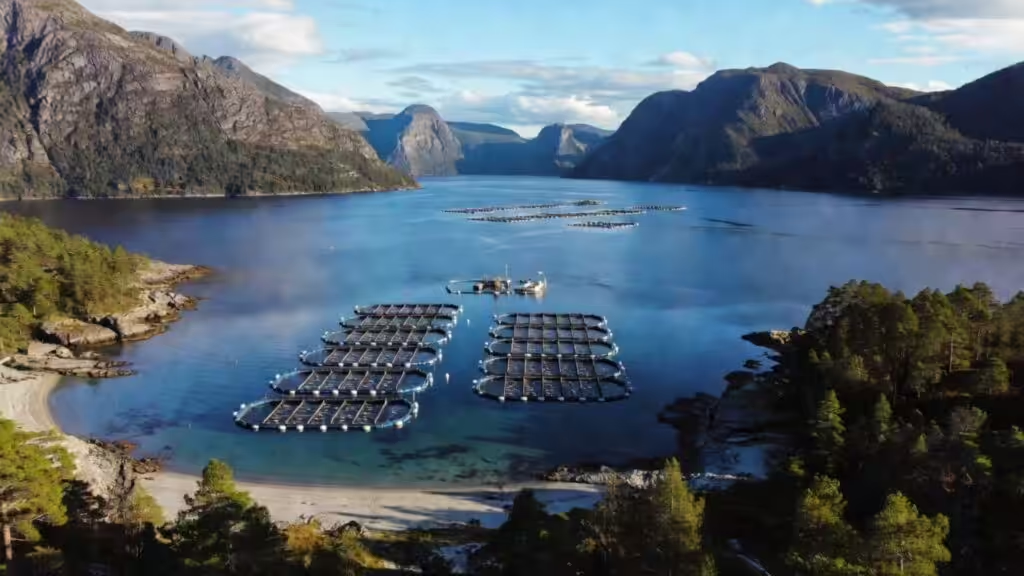

Traces of the salmon farm antibiotic florfenicol have been found in native seafood species more than 10 kilometres from the nearest fish pens using the drug.
This has raised new questions about how far residues can travel in Tasmanian waters.
Interim testing by the Institute for Marine and Antarctic Studies for the Department of Natural Resources and Environment Tasmania found the furthest positive result at Standaway Bay about 10.6 kilometres from treatment sites.
The department said IMAS has collected more than 840 samples so far. It said 165 have returned positive detections at very low levels and 209 results are still pending.
The traces were found in parts of abalone, lobsters, bryozoans, sea urchins and whelk.
Authorities said there have been no detections in lobster tails, oysters, mussels or periwinkles. The highest trace level reported so far was up to 0.06 milligrams per kilogram.
Salmon producers are using florfenicol under an emergency permit approved by the Australian Pesticides and Veterinary Medicines Authority.
The Tasmanian regulator said it is meant to fight P. salmonis, a marine bacterium that causes disease in salmon.
The industry began using the drug in pens south of Hobart from November after a bacterial outbreak.
Tasmania’s Public Health has said the trace levels found do not pose a risk to people eating seafood. The regulator and industry are also looking at market access with local and overseas buyers applying very strict or zero tolerance limits for residues in wild caught species.
The department has put temporary closures in place for some commercial wild fisheries around recently treated leases. It said these are precautionary measures that will be reviewed as more data comes in.
Independent MP Peter George said that “The international market declares there is zero tolerance for antibiotics so that is a real threat to our export markets” while Tasmanian Greens leader Rosalie Woodruff said that “The Liberals are failing to regulate salmon companies and require them to destock diseased fish”.
University of Queensland antibiotic resistance expert Mark Blaskovich warned the reported levels sit in a range that can push bacteria to build tolerance. He said it is an ideal setting for resistance to emerge.
The department said more sampling and analysis are under way to better understand how widespread the detections are and how long they last.
The EPA has also set an antibiotic residue monitoring schedule that salmon companies must follow, covering water, sediment and wild fish.
Also known about viral Senate beer versus gas clip here.