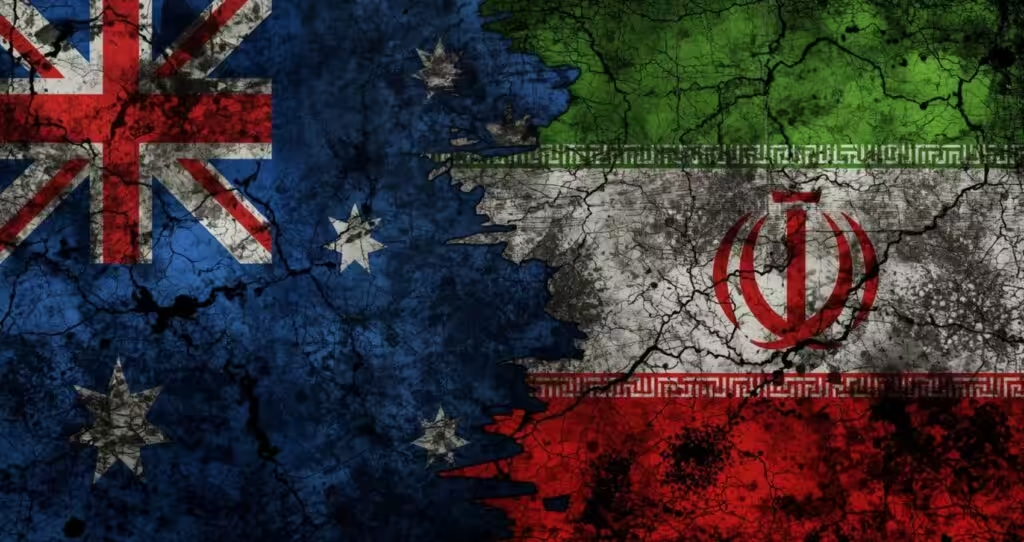
Australia has sanctioned seven individuals and four entities from Iran, following in line with the Western world’s attempts to hold Tehran responsible for its repressive actions in the Middle Eastern nation and its role in destabilizing the entire region.
Australian Foreign Minister Penny Wong announced the new sanctions on Tuesday, noting the mass arrests by the regime of Iran and its use of torture and forced confessions to keep information about the violence secret.
One of those sanctioned includes an individual thought to be responsible for putting in place 80,000 security personnel who engage in surveillance and enforcement of hijab rules on females.
According to Wong, the sanctions are part of the move against what she calls the “shadow banking system,” which provides finances to Hamas among others and funds ballistic missiles of Tehran.
This follows Britain’s announcement of sanctions, and just days after Washington’s “Economic Fury” financial sanctions on Iran.
The minister noted that since its formation, the Albanese government has sanctioned more than 230 individuals and entities in Tehran, with over 100 associated with the Islamic Revolutionary Guard Corps.
Ceasefire on the brink
The Australian move came as US President Donald Trump said the month old truce between Washington and Tehran was on “massive life support”.
From the Oval Office on Monday, Trump dismissed Iran’s latest counterproposal to end the ten week conflict as “a piece of garbage” that he didn’t even read all the way through.
The offer was totally unacceptable and badly written and Iranian negotiators do not understand the danger they face, he said.
This stand off is due to drastically opposing agendas. Washington expects to get quick concession regarding the Iranian nuclear program.
However, Tehran insists on a step by step solution starting with a formal declaration of ceasefire, removal of sanctions, and cessation of US naval blockage of Iranian ports.
Furthermore, Iran requested to recognize its sovereignty over the Strait of Hormuz, pay war reparations and unfreeze Iranian assets.
Meanwhile, according to Iranian foreign ministry, the proposal was reasonable and reflected Tehran’s legitimate rights.
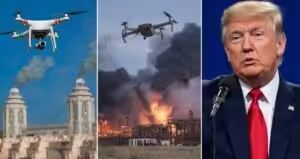
War News: Trump rebuffs Iran peace offer as US spy flights surge over Cuba and Gulf drone strikes mount
US President Donald Trump claimed that he intended to hold a meeting with his military advisers and discuss possible courses of actions, whereas US Secretary of Energy Chris Wright noted that without any agreement in coming days, “we will have to resort to military methods”.
It is predicted that this diplomatic confrontation will be hanging over Trump’s talks with the Chinese leader, Xi Jinping, scheduled later this week.
In its turn, China as the major Iranian oil importer can exert much economic pressure on Iran.
Brent crude rose above US$104 a barrel on Tuesday amid growing fears that the Strait of Hormuz, through which almost a fifth of the world’s seaborne oil once passed, will remain effectively closed for months.
Saudi Aramco’s chief executive said the world market was losing 100 million barrels of supply a week.
The World Food Programme warned that if the Middle East conflict drags on until mid 2026, the rising cost of food and fuel could push an additional 45 million people into acute hunger
Up to a quarter of the global fertilizer trade is typically conducted via the Strait of Hormuz, which is now effectively shut down at a time when sub Saharan Africa is heading into its harvest season.
Up to 318 million individuals globally were already suffering from crises levels of food insecurity prior to the escalation of hostilities.
From an Australian perspective, the intersection of strategic interests and humanitarian repercussions highlights the tough choice that the government has to make.