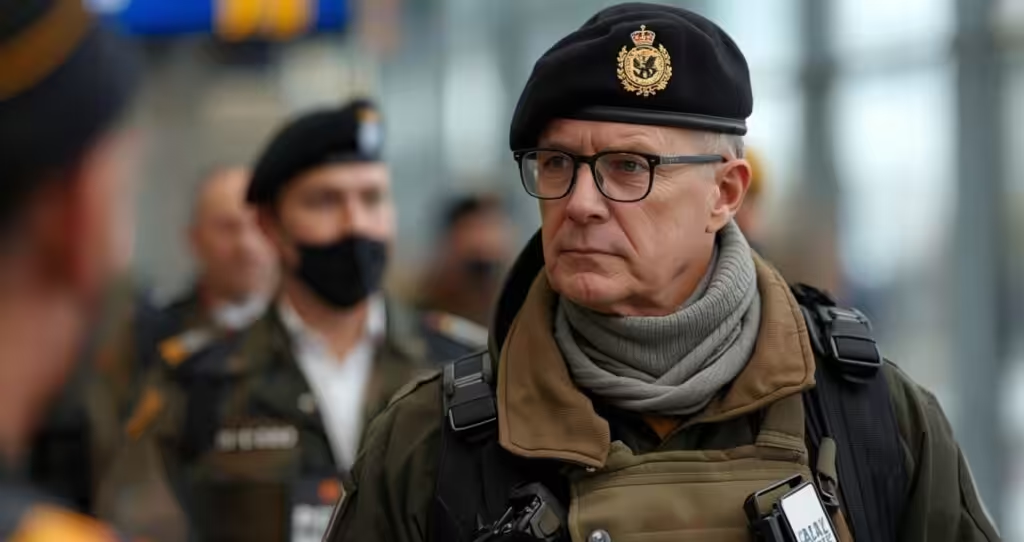
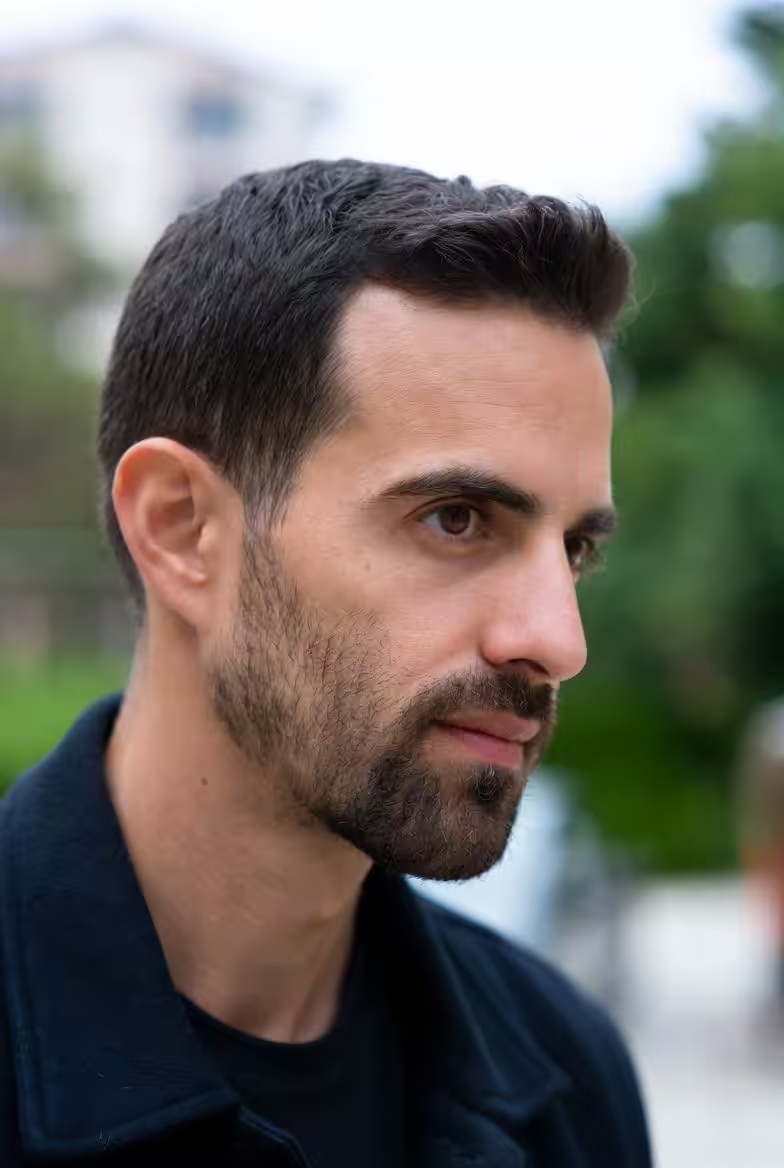
Australian veteran Ben Roberts Smith, who is Australia’s most decorated living soldier and one time winner of Victoria Cross medal, has been arrested in Sydney Airport by the Australian Federal Police.
They have suspicion of committing war crimes during his time in Afghanistan with the Australian military.
The Australian Federal Police stated that a man aged 47 and a former serving member of the Australian Defence Forces was set to be charged with five war crimes related to the murder of individuals in Afghanistan during the years from 2009 to 2012.
The charges were for the intentional killing of two people, who were Afghan civilians and aiding and abetting others to commit murder on three occasions.
Roberts Smith was set to face charges in New South Wales court on the same day, and if found guilty, he could serve up to a life term in jail.
The arrest is the result of years of investigation that started with the Brereton Report, which was made public in November 2020.
That investigation found proof that members of Australia’s special forces killed 39 civilians and prisoners during the war in Afghanistan, which lasted from 2005 to 2016.
He has always maintained that he has done nothing wrong.
Nevertheless, Smith’s reputation has taken a hard hit after Federal Court Judge Anthony Besanko ruled that a case of defamation filed by him against The Sydney Morning Herald, The Age and The Canberra Times.
Roberts Smith served in the Special Air Service Regiment and earned a Victoria Cross for his service during the Battle of Tizak in 2010.
He had been deployed to Afghanistan six times from 2006 to 2012. Roberts Smith lived in Queensland and was employed in the private sector following his exit from the Australian Defence Force (ADF).
The arrest of Roberts Smith on Tuesday marks the second instance in Australia where a former SAS soldier has faced criminal war crimes charges.
Previously, former SAS soldier Oliver Schulz pleaded not guilty to the charge of committing murder.
Veterans groups, human rights groups and the families of Afghan victims who have been calling for justice for years will be watching this case very closely.
It is a turning point for Australia’s military justice system.