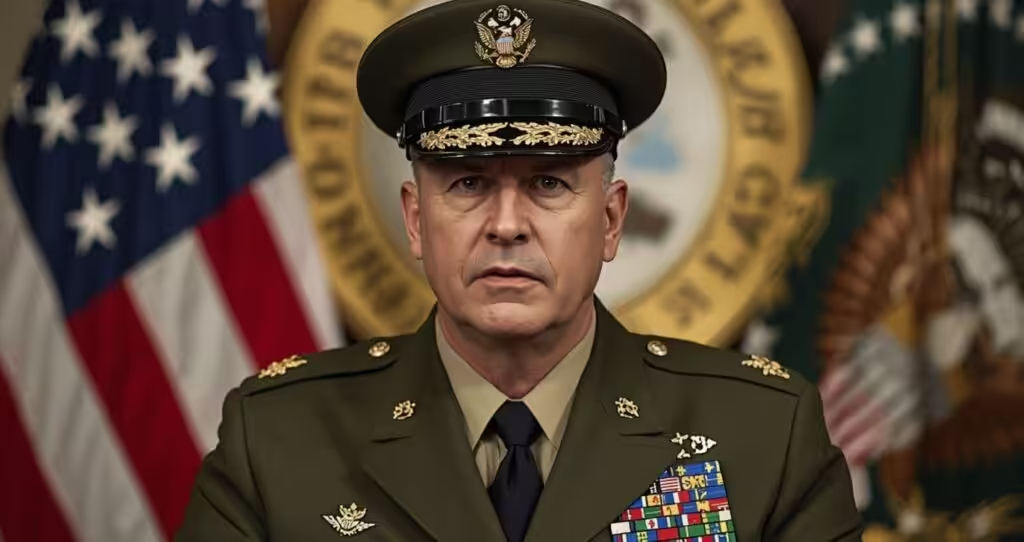
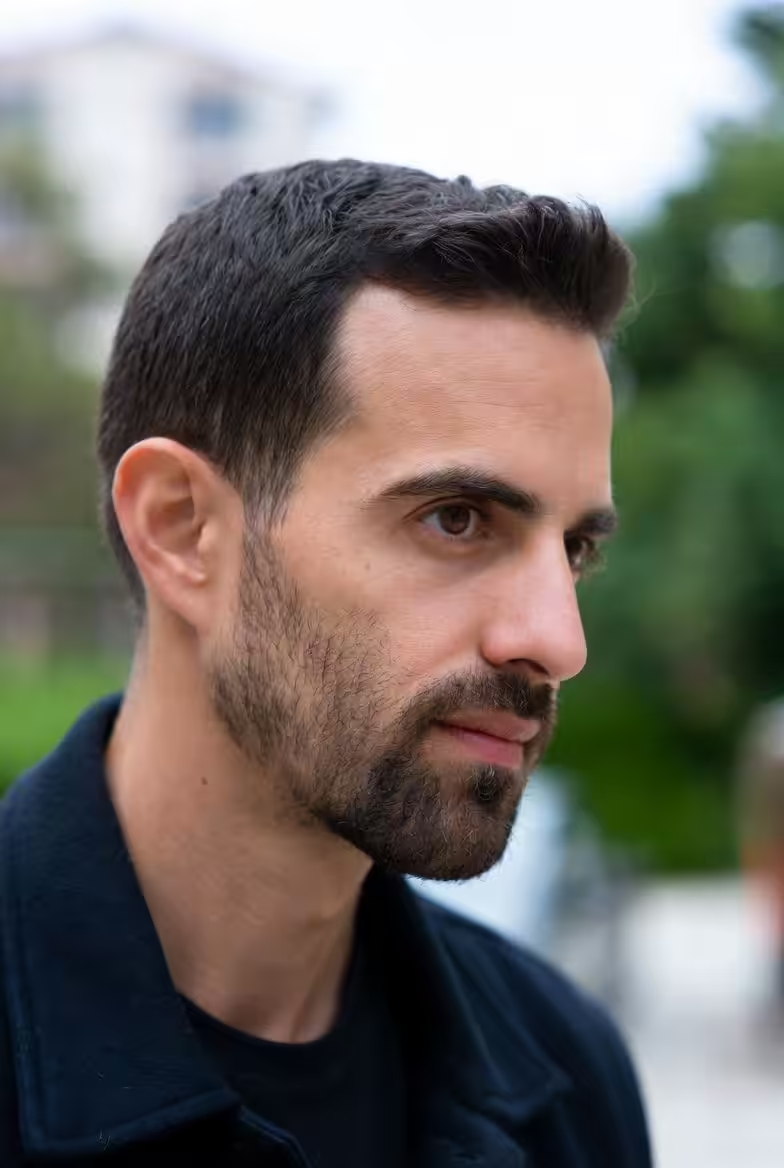
The United States military has lost its most senior Army officer after Defence Secretary Pete Hegseth demanded General Randy George retire immediately.
This is a dramatic shake up in the United States Army during a time of war, on the same day that over 40 countries gathered to discuss reopening the Strait of Hormuz.
General Randy George’s immediate retirement was confirmed by Pentagon spokesman Sean Parnell, who said that General George would be retiring from his position as the 41st Chief of Staff of the Army.
An Army official said that General George was not given a reason for his immediate retirement by Hegseth, though a senior War Department official said that Hegseth told General George, “It is time for a leadership change.”
The shake up, however is not limited to General George alone. There was no reason given for their dismissal.
Defence officials said that General David Hodne, commander of the Army’s Training and Doctrine Command and Major General William Green Jr., chief of chaplains for the Army, were also dismissed.
The dismissal is part of a growing list of military leaders who have been removed under the Trump administration, which has seen the removal of Joint Chiefs Chairman General CQ Brown, Chief of Naval Operations Admiral Lisa Franchetti and more than a dozen other military leaders since early 2025.
Coalition of 40 nations takes aim at Hormuz block
However, more than 40 countries have established a coalition aimed at ensuring free passage through the Strait of Hormuz, which has been closed since the outbreak of the US and Israeli war against Iran.
The coalition was held virtually, with British Foreign Secretary Yvette Cooper chairing the session.
The countries participating included European, Asian and Gulf nations.
US was not part of the session following President Trump’s call for the countries to take responsibility for opening the strait.
In early March, Iran closed the strait to foreign shipping after the US and Israel attacked Iranian military targets, killing Supreme Leader Ali Khamenei.
Oil prices have gone up to more than $100 per barrel, which is about 40% more than before the war. This is the biggest energy supply disruption since the 1970s.
Italy, the Netherlands and UAE issued a joint statement urging for a humanitarian corridor to ensure safe transport of fertiliser supplies to avoid a food crisis.
French President Emmanuel Macron took a firm stance against any forced military intervention to reopen the Strait of Hormuz, saying that it was “unrealistic” to do so without the consent of Iran, through a ceasefire.
The UN Security Council met to discuss a Bahrain backed resolution that allows for the use of force to reopen the Strait of Hormuz, though Russia, China and France have already indicated that they are against it.