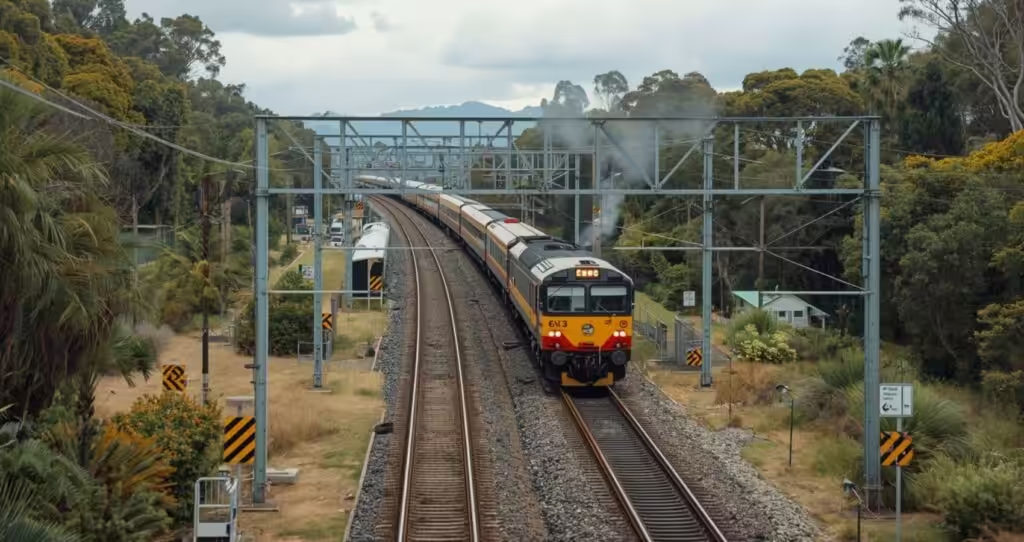

Passengers on Queensland trains are preparing for weeks of major disruption to their journeys, with significant closures of train tracks planned for every line in South East Queensland from early April.
Major closures of train tracks will change the face of train travel in South East Queensland from Friday, 3 April, until Sunday, 26 April, with buses replacing trains on major lines such as Beenleigh, Gold Coast, Caboolture and Sunshine Coast, at various times throughout the month.
The closures are needed for a series of infrastructure projects, which include work on the Cross River Rail, Beerburrum to Nambour Rail Upgrade, new digital signalling and work on the Logan and Gold Coast Faster Rail project.
Depending on which parts of the track are closed, Translink has issued a warning that some trips may take significantly longer than usual during the closures.
The impact on travel will vary from week to week. Most lines will be impacted over the Easter long weekend, with buses taking the place of trains between Banoon and Boggo Road, Northgate and Bowen Hills, and Gympie North and Caboolture.
The remainder of the month will see more closures that impact the Beenleigh and Gold Coast corridors.
Also Read: States hold firm against free public transport as pressure mounts from unions and crossbenchers
The timing couldn’t be any worse. The closures come at a time when Australia is experiencing its worst fuel supply disruption in decades.
In Queensland, there are currently 55 service stations without diesel fuel, while 33 are without unleaded fuel.
The shortages have been caused by a disruption in oil supplies from the Middle East.
Diesel is the preferred choice for long distance trains, trucks and ships because it has more energy per liter than petrol. Diesel is more fuel efficient. Australia has about 30 days of diesel in reserve.
On Monday, the federal government took action to lessen the burden by eliminating the heavy vehicle road user charge for six months, halving the fuel excise for three months and reducing the petrol levy by 26.3 cents per litre.
Nevertheless, the convergence of these infrastructure shutdowns and fuel supply uncertainties is making the situation even more frustrating for the commuting public and the regional population.
The Australian Livestock and Rural Transporters Association is now urging the federal government to clarify the situation with Australia’s supply of diesel fuel, with prices rising by as much as 60 cents per liter.
For the South East Queensland commuting public, the advice is simple: plan ahead, leave early and check the schedules before heading out.
As the scale and complexity of the work being done necessitate the longer shutdown to ensure the safety of the workers and to allow them to complete as much work as possible.
Whether the situation with the supply of diesel fuel in the region remains stable throughout the month of April will determine if the situation remains merely inconvenient or if it can become much worse.