
The trucking industry in Australia has launched a scathing attack on the federal government’s response to the fuel crisis, saying incentives for carpooling and working from home will not alleviate the pain for truckies who are already shutting their businesses down.
The National Road Transport Association said the government’s recent announcements were “too little, too late” and CEO Warren Clark said dozens of businesses are already closing their doors due to the rising costs and cash flow.
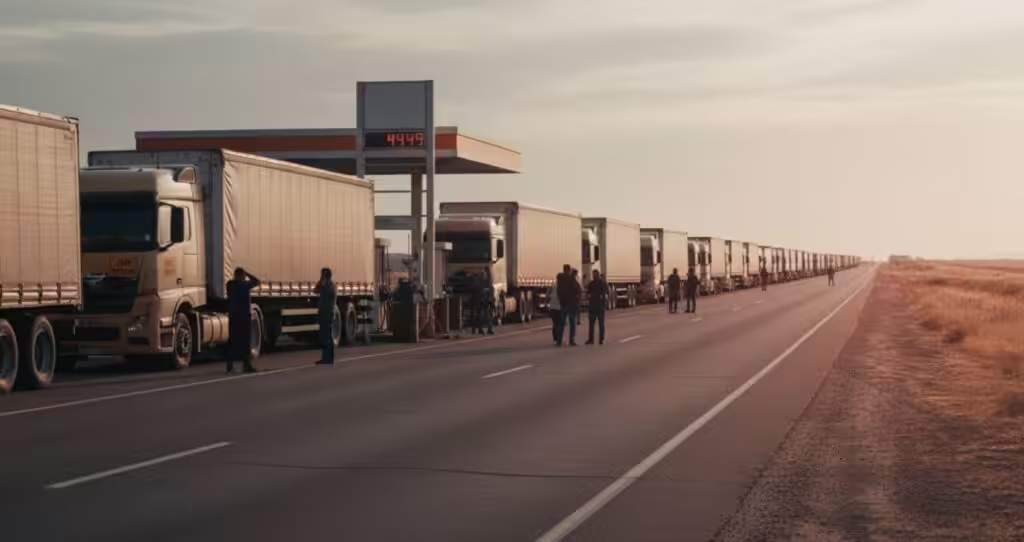
Mr. Clark described the state of the trucking industry as “desperate,” saying truckies are having their fuel cards declined and truck owners are driving from station to station looking for diesel fuel.
He said the crisis is not looming; it is already here and now is the time for the government to act and deliver instant solutions.
The trucking industry’s comes as Prime Minister Anthony Albanese is set to call a second national cabinet meeting on Monday to discuss emergency measures such as discounts for public transport users, voluntary work from home options and carpooling incentives.
Due to the Iranian conflict and the effective closure of the Strait of Hormuz, diesel prices have increased by more than 40% since late February.
With South Australia surpassing the $3 threshold, the national average has increased to about 296 cents per litre.
A single trip from Sydney to Melbourne now costs more than $1,300 in fuel alone for an owner operator operating a B double, up from roughly $900 six months ago.
However, NatRoad argues this will not be felt for weeks and says that many small to medium operators simply cannot wait until these changes are implemented.
And is urging the Federal Government to activate financial support for truckies, to impose a six month moratorium on heavy vehicle loan repayments through hardship arrangements with lenders, and to remove the road user charge for heavy vehicles immediately.
The Disaster Recovery Funding Arrangements have also been urged to be activated by NatRoad to deal with the crisis, as the Hormuz crisis is an external event and should be treated as such to trigger the same response as a natural disaster event.
When fuel card bills from March arrive in April, Clark warned that a financial cliff is imminent and that many long term operators will be permanently forced out of business.
Transport company liquidations have already increased by 48% since 2025, according to industry data.
Opposition leader Angus Taylor has called on the government to halve the 52.6 cent per litre fuel excise.
He claims this would provide instant relief.
With crude oil priced at around US$108 a barrel and Treasury boss Jim Chalmers warning of a potential increase to US$150 a barrel, the squeeze on the government continues.
To truckies watching their livelihoods disappear before their eyes, carpooling schemes and renegotiation of contracts seem a long way off from filling up the diesel tank the next morning.