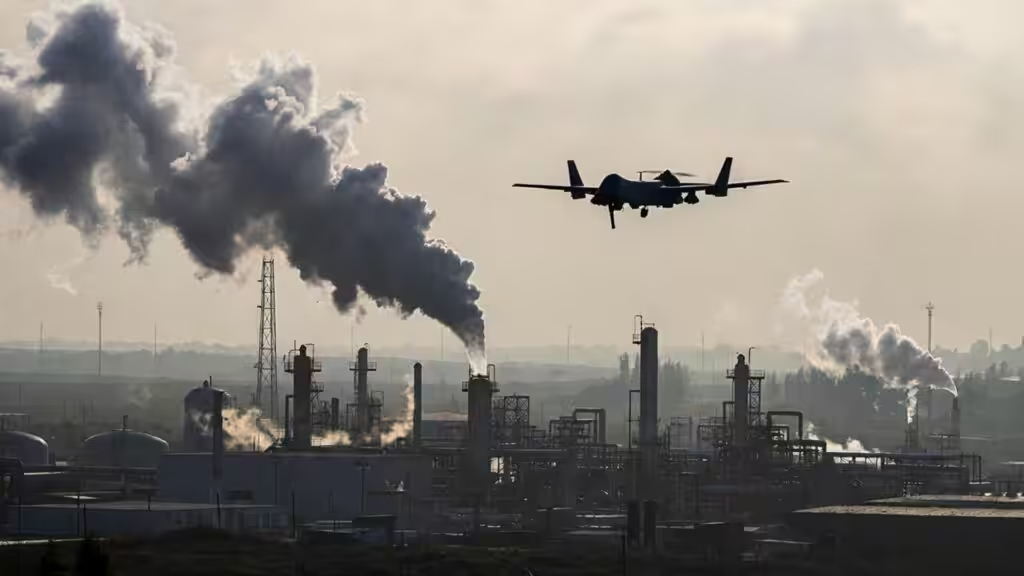

The war in Ukraine is increasingly being fought through fuel depots, drone routes and energy prices, as pressure on the battlefield spills into global markets and supply chains. As Dylan Combellick argues in his Medium analysis, oil is no longer a side issue in the Ukraine war. It is part of the conflict’s basic logic.
That argument comes at a time of renewed pressure in both the war zone and energy markets. The US Energy Information Administration said this month it expects Brent crude to stay above US$95 a barrel for the next two months, with the forecast shaped by disruption in the Middle East and the risk of reduced flows through the Strait of Hormuz.
Latest News: Iran security chief Ali Larijani reported killed in Israeli strike
A series of Ukrainian drone attacks on energy targets in Russia’s Krasnodar region, including strikes on an oil refinery, a port and another oil facility where debris started a fire.
The battlefield picture remains changeable and, in some places, hard to verify independently. Russia launched 211 drones in a rare daytime assault on Kyiv on March 16, with Ukraine saying it shot down 194 of them.
At the same time, fighting around the Sumy border area remains disputed, with Moscow saying it is building buffer zones there and Kyiv insisting it has disrupted Russia’s latest offensive plans.
War News: Death toll rises as Israel widens attacks in Lebanon and Iran
What gives this latest phase of the war its sharpest edge is the way military and economic pressure now strengthen each other.
Drone attacks on refineries and storage sites can raise costs far beyond the front, while higher oil prices give Moscow extra revenue even as Ukraine tries to damage Russia’s energy infrastructure.
Combellick’s article makes that case clearly, presenting oil not as a side issue but as one of the war’s most important arenas.