
A fast tracked federal visa bill has prompted allegations of double standards after the Albanese government provided protection to members of the Iranian women’s football team.
They immediately proceeded to grant itself new powers to block the arrival of temporary visa holders from crisis stricken countries.
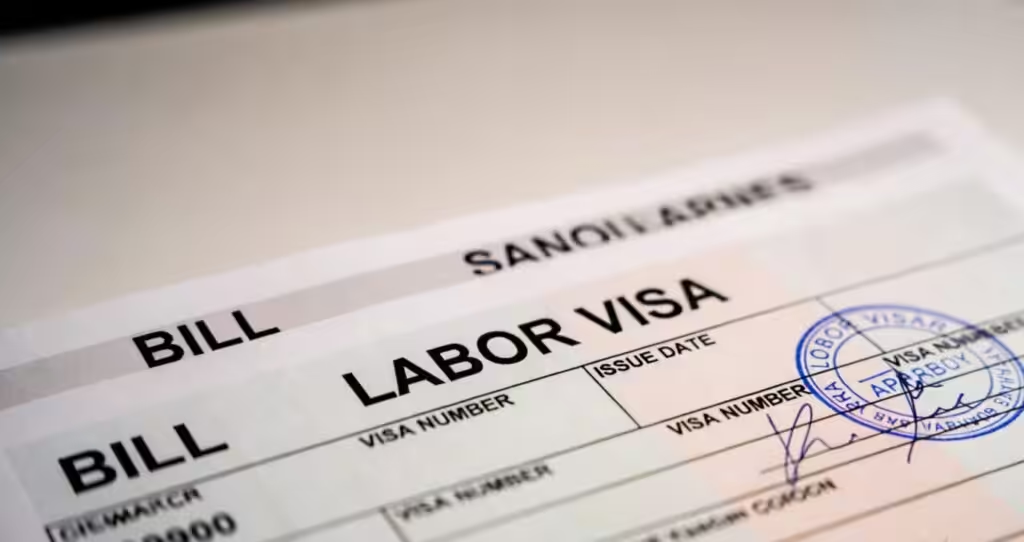
The proposed Migration Amendment Bill will allow the home affairs minister to impose temporary restrictions on the entry of temporary visa holders from certain countries if events overseas raise the prospect that they might not leave Australia when their visa expires.
Parliament’s official summary says the bill is now before the Senate. The focus of the current discussion is Iran.
A parliamentary hearing was informed by Home Affairs officials that approximately 7,200 Iranians, out of a larger pool of over 40,000 visa holders throughout the Middle East, held temporary visas for Australia.
According to the bill, the prime minister and the minister of foreign affairs must approve a “arrival control determination” before it can be extended for a maximum of six months.
Some close relatives of Australians would be exempt from the proposed restrictions, but those outside of Australia would be subject to them.
“It’s hard to stomach that Labor would give safety to a handful of athletes while closing the door on thousands of other Iranians who have already passed Australian checks,” said Greens senator David Shoebridge.
Refugee Council of Australia chief executive Paul Power said the same policy could have been used to deny entry to the Iranian football team.
The government claims that rather than blocking humanitarian avenues, the measure is intended to maintain the integrity of the temporary visa system.
Also Read: Five Iran players vanish from team hotel and seek safety in Australia
According to Tony Burke, in the present situation, visas granted prior to Iran becoming a conflict zone “would not have been issued.”
The Coalition has supported the idea in theory, arguing that the government needs a more comprehensive tool in cases where international conflict raises the likelihood that temporary immigrants will try to stay in Australia.
The political optics are much less certain, but that defense might keep the bill moving.