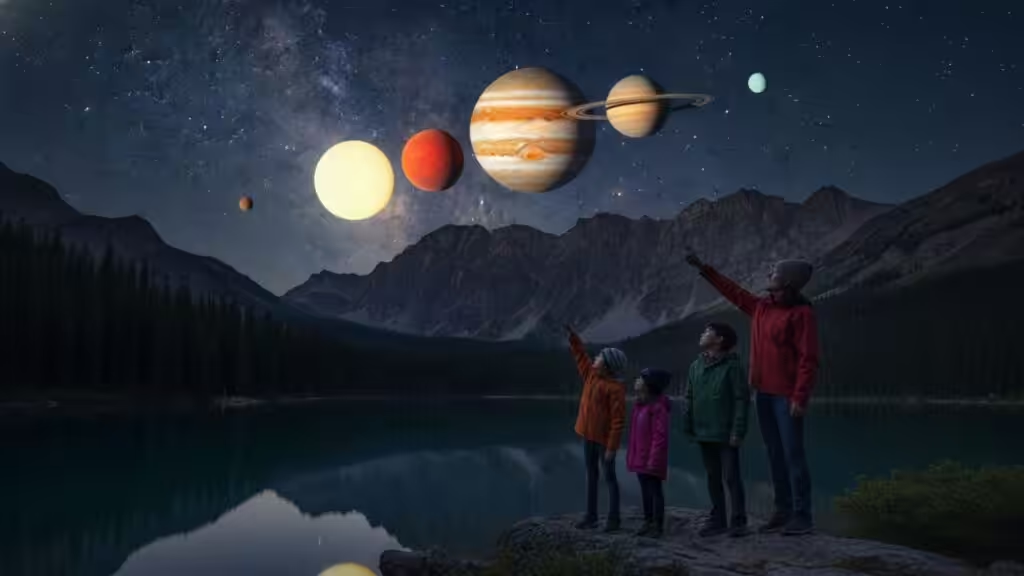

Skywatchers across Australia and much of the world will have a chance to see six planets lined up in the evening sky on Saturday, February 28.
Mercury, Venus, Jupiter, Saturn, Uranus and Neptune will appear in the same stretch of sky soon after sunset. NASA has called the event a planetary parade and said it will be easiest to see with clear skies and an open view of the horizon.
Despite the name, the planets will not form a perfect straight line. They will also not be close together in space. The view comes from perspective, with the planets following the same broad path the Sun takes across the sky called the ecliptic.
As their orbits carry them around the Sun at different speeds, they can sometimes look grouped together from Earth.
Most people will not need special equipment to enjoy the best parts of the display. Venus and Jupiter should be the easiest to spot. They will shine bright as the sky gets darker.
Saturn can also be seen with the naked eye. Mercury usually sits low and can be harder to catch before it drops below the western horizon. Uranus and Neptune are much fainter and NASA said you will likely need binoculars or a small telescope to see them.
Know the latest news here: Nine childcare services risk losing subsidies after missing safety deadline.
Astronomers recommend going outside shortly after sunset and finding a spot away from streetlights with a clear view to the west. A phone sky map app can help you check what you are looking at especially for the dimmer planets.
Experts also warn people never to point binoculars or a telescope near the Sun. They say you should wait until the Sun has fully set before searching near the horizon.